Imagine walking into a quiet, sterile university laboratory. The year is 1951, and you have volunteered for what you believe is a simple vision test. You sit at a table alongside seven other participants. The researcher, Solomon Asch, stands at the front of the room and places two large white cards on an easel. On the left card, there is a single, bold vertical line. On the right card, there are three lines of varying lengths. Your task is remarkably simple: state out loud which of the three lines on the right matches the length of the single line on the left. The answer is not a trick; it is blatantly, undeniably obvious to anyone with functioning eyes.
The experiment begins. The researcher asks the first person for their answer. They confidently choose Line B. The second person also chooses Line B. The third, fourth, and fifth people all state, without a moment of hesitation, that Line B is the correct match. As the turn slowly approaches you, a cold knot of anxiety begins to form in your stomach. You look at the cards again. Line B is entirely the wrong length. Line C is clearly the correct answer. But everyone else is in total agreement. What you do not know is that the other seven people in the room are actors, carefully instructed to give the wrong answer. You are the only actual subject. The true experiment is not about human vision; it is about the structural integrity of your free will.
When your turn finally arrives, you are forced into an agonizing psychological crossroads. Do you trust your own senses, or do you surrender to the crushing gravity of the consensus? The results of Asch’s experiment were as fascinating as they were terrifying. Nearly 75 percent of the participants conformed to the group's false consensus at least once. Some subjects later admitted they knew the group was wrong but went along with it to avoid the unbearable discomfort of standing out. Others, more chillingly, experienced a distortion of perception; the relentless pressure of the majority actually convinced their brains that the wrong line was the right one.
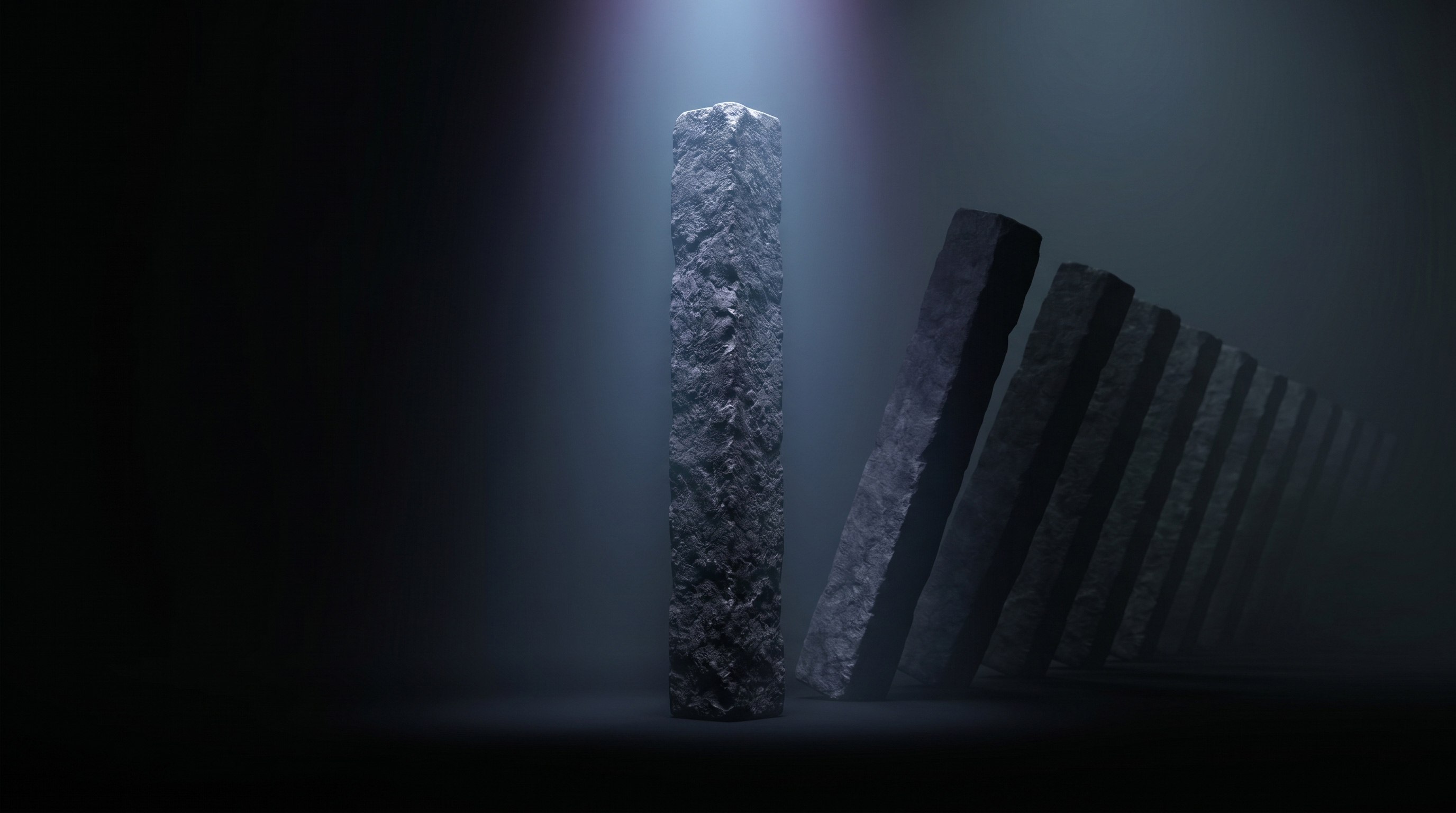
This experiment stripped bare the invisible architecture of social compliance. It revealed that our need for belonging is often stronger than our commitment to reality. We are biologically wired to fear isolation, viewing the disapproval of the group as a threat to our very survival. Consequently, society operates on a geometry of obedience, where the jagged edges of individuality are constantly filed down to fit smoothly into the collective shape. The tragedy is not just that people lie to fit in, but that they eventually forget they are lying at all, adopting the group's delusions as their own fundamental truths.
To break free from this geometric prison requires a profound and often painful act of rebellion. It demands the willingness to endure the strange looks, the whispered judgments, and the heavy silence of a room that completely disagrees with you. True individuality is not merely a stylistic choice or a rebellious aesthetic; it is the raw, unflinching courage to look at a fundamentally broken world, listen to a chorus of millions telling you that a short line is long, and calmly speak the objective truth.