On the evening of November 22, 1987, thousands of people in Chicago were sitting in their living rooms watching the nine o'clock sports news on WGN-TV. The anchor, Dan Roan, was in the middle of a highlight reel when the screen suddenly flickered and went entirely black. The studio had not lost power, and there was no technical malfunction on their end. Someone, operating from an unknown location, was overpowering the station's massive broadcast signal.
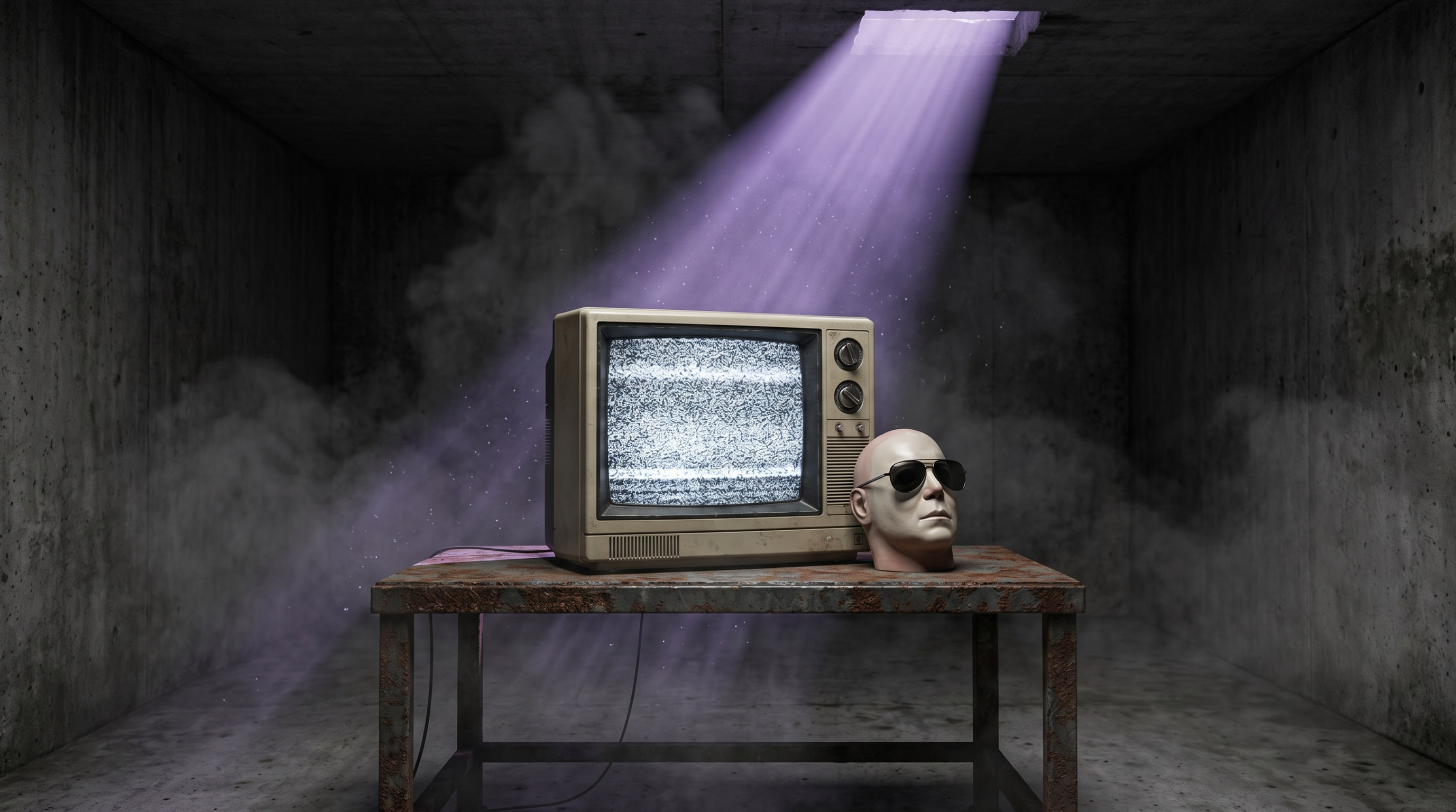
When the video feed violently snapped back to life, Dan Roan was gone. Instead, viewers were confronted with a highly unsettling, surreal image. A person wearing a pale, grinning rubber mask and dark sunglasses was bouncing frantically in front of a rotating panel of corrugated sheet metal. The mask was a crude replica of Max Headroom, a popular fictional AI character from the 1980s. For exactly 21 seconds, a loud, distorted buzzing sound drowned out the broadcast as the masked figure swayed uncontrollably. Panicked engineers at WGN frantically switched their transmitter frequencies, eventually managing to cut the pirate signal and return to the bewildered sports anchor, who simply stared at the camera and muttered, "Well, if you're wondering what just happened, so am I."
But the hacker was not finished. Two hours later, at 11:15 PM, viewers watching a broadcast of Doctor Who on a different network, WTTW, experienced the exact same blackout. This time, the engineers could not stop it. For a terrifying 90 seconds, the masked figure completely hijacked the airwaves of a major American city. The audio was a chaotic, distorted mess of moaning, screaming, and bizarre, disconnected phrases. The figure hummed the theme song to a cartoon, muttered complaints about a local newspaper pundit, and tossed a can of Pepsi at the camera. The broadcast ended with the masked figure pulling down his pants to be spanked with a flyswatter by an unseen accomplice. Then, just as abruptly as it began, the screen dissolved into static, and the episode of Doctor Who resumed in dead silence.
The authorities were absolutely stunned. Hijacking a major television broadcast in 1987 was not a simple prank. It required a staggering amount of highly specialized engineering knowledge and massive, expensive microwave transmission equipment. The hacker had to physically aim a powerful dish at the receiving towers on top of the John Hancock Center and the Sears Tower, perfectly matching the frequencies and overpowering the stations' own multi-million-dollar transmitters. It was an act of extreme technical violence that exposed a terrifying vulnerability in the nation's communication infrastructure.
The Federal Communications Commission (FCC) and the FBI launched a massive, immediate manhunt. They scoured the city for rogue transmitters, interrogated disgruntled former television engineers, and analyzed the corrugated metal background in the video to locate the warehouse where it was filmed. They promised heavy federal prison sentences for the perpetrators. Yet, they found absolutely nothing. Decades have passed, the analog television era has died, and the identity of the person behind the mask remains a complete mystery. The architects of the most famous broadcast intrusion in history simply turned off their equipment and vanished back into the dark, leaving behind only 90 seconds of highly distorted, analog madness.