In December 1944, a young Japanese intelligence officer named Hiroo Onoda was deployed to the small, remote island of Lubang in the Philippines. His orders from his commanding officer, Major Yoshimi Taniguchi, were absolute and terrifyingly specific. He was instructed to wage guerrilla warfare against the approaching American forces, to never surrender, and to never take his own life. "It may take three years, it may take five," Taniguchi told him, "but whatever happens, we'll come back for you." When the Allied forces overwhelmed the island a few months later, Onoda and three other soldiers retreated deep into the dense, suffocating jungle to continue the fight.
In August 1945, the Empire of Japan formally surrendered. World War II was completely over. To inform the scattered guerrilla units across the Pacific, Allied planes dropped thousands of leaflets over the jungles of Lubang, announcing that the war had ended and instructing soldiers to lay down their arms. Onoda, highly trained in the arts of deception and military intelligence, found a leaflet, studied it closely with his men, and concluded it was a clumsy American psychological operation. They burned the paper and retreated deeper into the shadows.
As the years dragged on, the outside world made frantic attempts to pull the men out of their violent illusion. In 1952, planes dropped letters and photographs from the soldiers' own families, pleading with them to come home. Onoda meticulously analyzed the handwriting and the grammar, convincing himself and his men that the letters were forged by the enemy. He believed the system was trying to trick him into breaking his orders. For decades, they lived like ghosts, surviving on stolen coconuts and engaging in fierce shootouts with local police whom they believed were disguised enemy combatants. One by one, Onoda's companions either surrendered or were killed in skirmishes. By 1972, Onoda was completely alone.
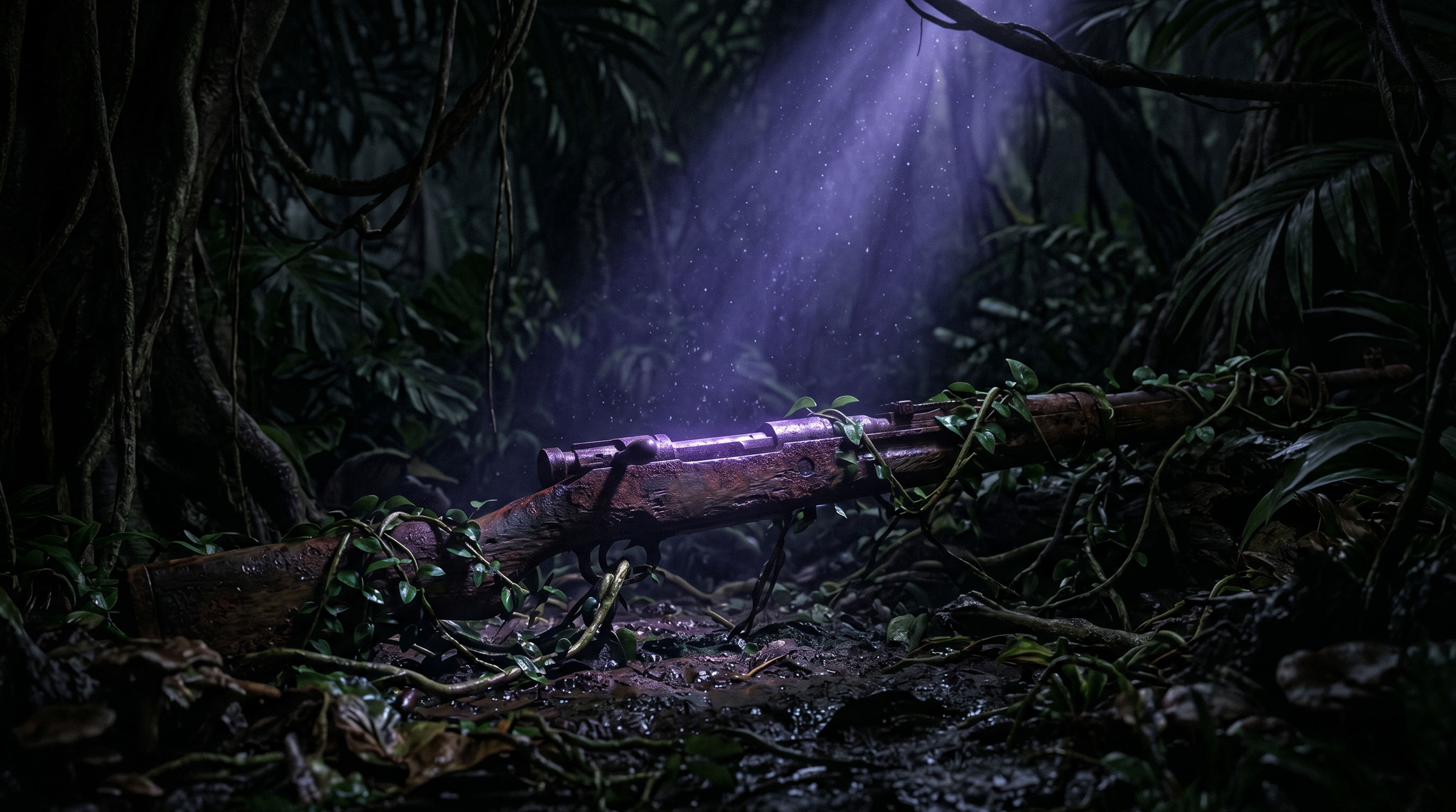
For twenty-nine years, Hiroo Onoda waged a meticulous, disciplined war against a phantom enemy. He maintained his Type 99 Arisaka rifle in pristine, perfect working condition, meticulously hoarding his remaining ammunition. He was a man trapped in a perfectly sealed psychological cage, fighting for an empire that no longer existed, defending an island from an invasion that had ended before he was thirty.
In 1974, a young Japanese backpacker named Norio Suzuki ventured into the jungle specifically looking for the legendary soldier. Astoundingly, he found him. Onoda was fifty-two years old, wearing the rotting, patched remnants of his imperial uniform. Even when Suzuki explained that Japan was now a modern, peaceful nation, Onoda flatly refused to surrender. He stated he would only lay down his weapon if his direct commanding officer ordered him to do so.
The Japanese government eventually located Major Taniguchi, who had long since retired from the military and was working quietly as a bookseller. They flew him to Lubang Island. On March 9, 1974, wearing his old uniform, Taniguchi walked into the jungle and met the ghost he had created. He read the official orders of surrender, officially relieving Onoda of his duty. Only then, after twenty-nine years of absolute, unquestioning loyalty to a vanished reality, did Hiroo Onoda finally lower his rifle, hand over his samurai sword, and weep.