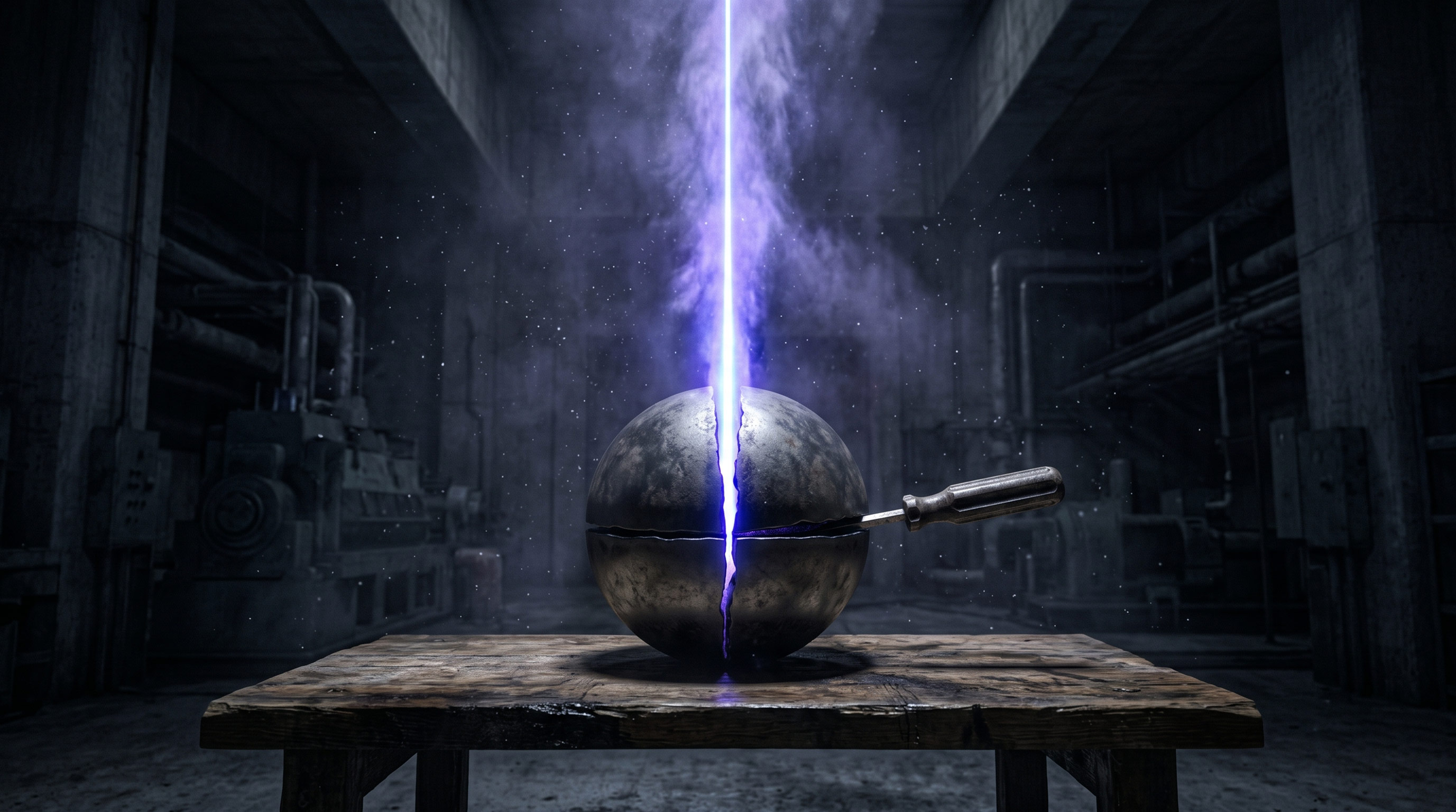
On May 21, 1946, deep inside a highly classified laboratory in Los Alamos, New Mexico, eight scientists gathered around a wooden table. In the center of the table sat a 14-pound, perfectly smooth sphere of refined plutonium. It was the exact same type of radioactive heart that had recently detonated over Nagasaki. The scientists referred to it as the "Demon Core," a nickname it had earned after killing another researcher the previous year. On this afternoon, a brilliant and notoriously arrogant physicist named Louis Slotin was preparing to perform a highly dangerous experiment that he casually called "tickling the dragon’s tail."
The objective of the experiment was to bring the plutonium core to the absolute edge of a runaway nuclear chain reaction, stopping just milliseconds before it went critical. To do this, Slotin placed two hollow half-spheres of beryllium around the plutonium. As the top half was lowered, it reflected neutrons back into the core, increasing its reactivity. The safety protocol mandated that the scientists use wooden shims to carefully keep the two halves from fully touching. If the beryllium spheres completely closed around the plutonium, the core would go critical, releasing a lethal burst of radiation.
Slotin, however, despised the slow, methodical safety protocols. He preferred a faster, more visceral method. Instead of the approved wooden shims, he used the blade of a standard, flathead screwdriver to prop open the top hemisphere. He stood over the most dangerous object on the planet, holding the top beryllium shell with his left thumb, and casually twisting the blade of the screwdriver with his right hand to widen and narrow the gap, listening to the clicking of the Geiger counters. He had performed this exact, reckless maneuver over a dozen times before, much to the horror of his colleagues.
At 3:20 PM, as Slotin twisted the tool to lower the shell, the tip of the flathead screwdriver slipped.
The heavy beryllium shell dropped completely, sealing the plutonium core inside. In a fraction of a millisecond, the core went prompt critical. There was no explosion, but the air inside the laboratory was instantly ionized. A sudden, blinding flash of pure, ethereal blue light violently illuminated the dimly lit room. A wave of intense, invisible heat swept across the faces of the eight men. Slotin immediately tasted a sharp, sour metallic flavor in his mouth—a biological reaction to a massive dose of ionizing radiation tearing through his cellular structure.
Instinctively, Slotin violently jerked his left hand upward, flipping the top beryllium shell onto the floor and terminating the reaction. The entire event, from the slip of the screwdriver to the removal of the shell, lasted less than one second. The blue light vanished, plunging the room back into its normal, quiet state. The physical world looked exactly as it had a moment before, but the biological reality had been permanently shattered.
As the Geiger counters in the room screamed in a continuous, deafening wail, Slotin calmly instructed his colleagues to stand exactly where they had been when the flash occurred. He pulled a piece of chalk from his pocket and drew circles around their shoes on the floor, calculating their distance from the core to estimate their radiation exposure. When he finished mapping the room, he looked at his colleagues. Because he had been leaning directly over the core, his body had absorbed the absolute brunt of the invisible blast, effectively shielding the others from instant death. He had received a fatal dose of over 1,000 rads in less than half a second. He quietly turned to his closest colleague, Alvin Graves, and said, "Well, that does it."
Nine days later, after a total collapse of his internal organs, Louis Slotin was dead. The Demon Core was later melted down and its material integrated into a different weapon, leaving behind only the chilling legacy of a single, microscopic slip of a tool against the absolute forces of nature.