

How the World Lost Its Color
There is a common psychological phenomenon where people look back at photographs, films, or memories of the mid-20th century and feel an undeniable sense of vibrancy.

Universe 25
In 1968, an American ethologist named John B. Calhoun initiated an experiment that was intended to be a scientific blueprint for a biological paradise
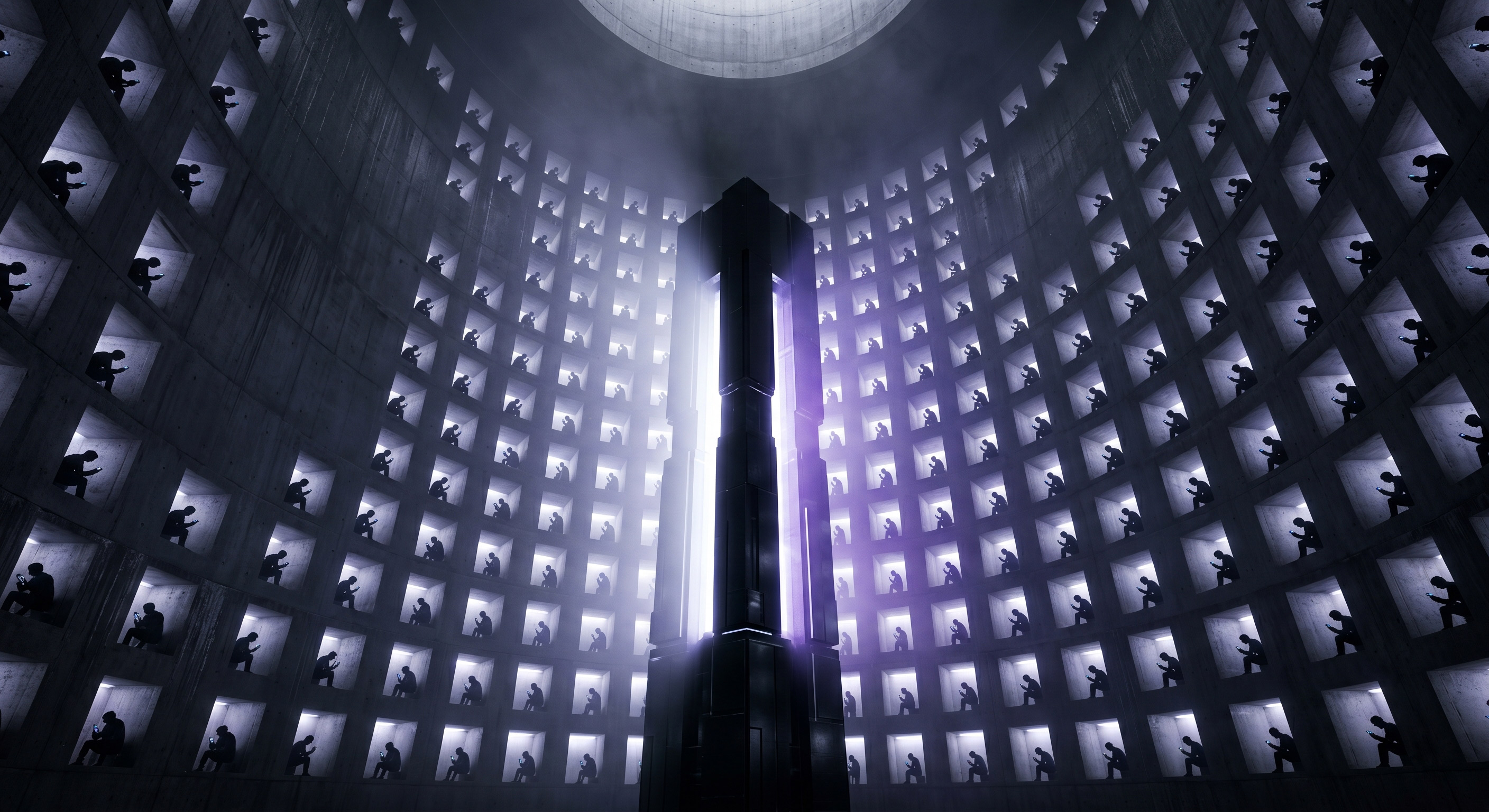
The Digital Panopticon
In the late 18th century, the English philosopher Jeremy Bentham designed what he believed to be the ultimate, most efficient architecture of control
Editor's Picks
CURATED_STORIES
The Unsolved Broadcast of 1987
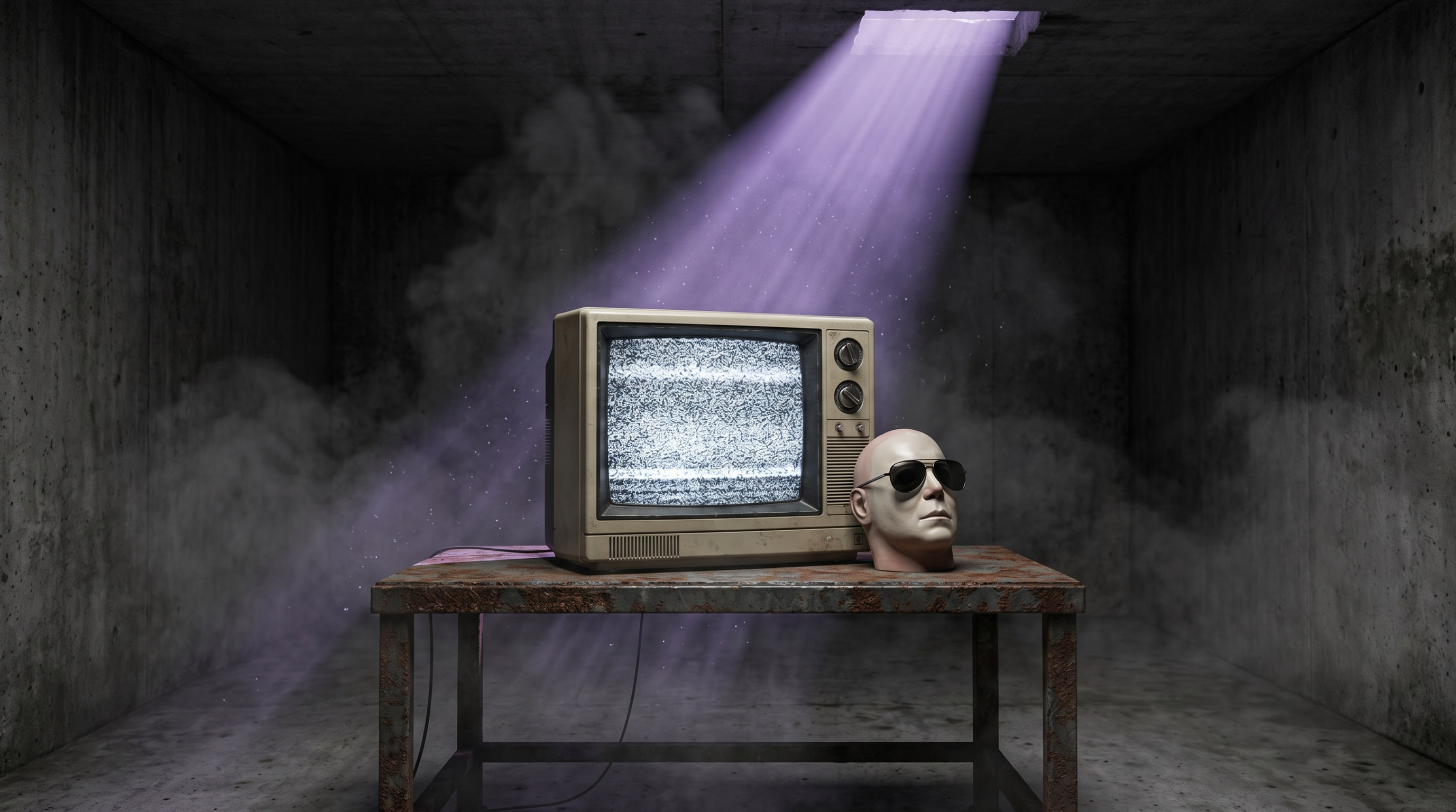
On the evening of November 22, 1987, thousands of people in Chicago were sitting in their living rooms watching the nine o'clock sports news on WGN-TV. The anchor, Dan Roan, was in the middle of a highlight reel when the screen suddenly flickered and went entirely black. The studio had not lost power, and there was no technical malfunction on their end. Someone, operating from an unknown location, was overpowering the station's massive broadcast signal. When the video feed violently snapped back to life, Dan Roan was gone. Instead, viewers were confronted with a highly unsettling, surreal image. A person wearing a pale, grinning rubber mask and dark sunglasses was bouncing frantically in front of a rotating panel of corrugated sheet metal. The mask was a crude replica of Max Headroom, a popular fictional AI character from the 1980s. For exactly 21 seconds, a loud, distorted buzzing sound drowned out the broadcast as the masked figure swayed uncontrollably. Panicked engineers at WGN frantically switched their transmitter frequencies, eventually managing to cut the pirate signal and return to the bewildered sports anchor, who simply stared at the camera and muttered, "Well, if you're wondering what just happened, so am I." But the hacker was not finished. Two hours later, at 11:15 PM, viewers watching a broadcast of Doctor Who on a different network, WTTW, experienced the exact same blackout. This time, the engineers could not stop it. For a terrifying 90 seconds, the masked figure completely hijacked the airwaves of a major American city. The audio was a chaotic, distorted mess of moaning, screaming, and bizarre, disconnected phrases. The figure hummed the theme song to a cartoon, muttered complaints about a local newspaper pundit, and tossed a can of Pepsi at the camera. The broadcast ended with the masked figure pulling down his pants to be spanked with a flyswatter by an unseen accomplice. Then, just as abruptly as it began, the screen dissolved into static, and the episode of Doctor Who resumed in dead silence. The authorities were absolutely stunned. Hijacking a major television broadcast in 1987 was not a simple prank. It required a staggering amount of highly specialized engineering knowledge and massive, expensive microwave transmission equipment. The hacker had to physically aim a powerful dish at the receiving towers on top of the John Hancock Center and the Sears Tower, perfectly matching the frequencies and overpowering the stations' own multi-million-dollar transmitters. It was an act of extreme technical violence that exposed a terrifying vulnerability in the nation's communication infrastructure. The Federal Communications Commission (FCC) and the FBI launched a massive, immediate manhunt. They scoured the city for rogue transmitters, interrogated disgruntled former television engineers, and analyzed the corrugated metal background in the video to locate the warehouse where it was filmed. They promised heavy federal prison sentences for the perpetrators. Yet, they found absolutely nothing. Decades have passed, the analog television era has died, and the identity of the person behind the mask remains a complete mystery. The architects of the most famous broadcast intrusion in history simply turned off their equipment and vanished back into the dark, leaving behind only 90 seconds of highly distorted, analog madness.

The Phantom Soldier of Lubang
In December 1944, a young Japanese intelligence officer named Hiroo Onoda was deployed to the small, remote island of Lubang in the Philippines. His orders from his commanding officer, Major Yoshimi Taniguchi, were absolute and terrifyingly specific. He was instructed to wage guerrilla warfare against the approaching American forces, to never surrender, and to never take his own life. "It may take three years, it may take five," Taniguchi told him, "but whatever happens, we'll come back for you." When the Allied forces overwhelmed the island a few months later, Onoda and three other soldiers retreated deep into the dense, suffocating jungle to continue the fight. In August 1945, the Empire of Japan formally surrendered. World War II was completely over. To inform the scattered guerrilla units across the Pacific, Allied planes dropped thousands of leaflets over the jungles of Lubang, announcing that the war had ended and instructing soldiers to lay down their arms. Onoda, highly trained in the arts of deception and military intelligence, found a leaflet, studied it closely with his men, and concluded it was a clumsy American psychological operation. They burned the paper and retreated deeper into the shadows. As the years dragged on, the outside world made frantic attempts to pull the men out of their violent illusion. In 1952, planes dropped letters and photographs from the soldiers' own families, pleading with them to come home. Onoda meticulously analyzed the handwriting and the grammar, convincing himself and his men that the letters were forged by the enemy. He believed the system was trying to trick him into breaking his orders. For decades, they lived like ghosts, surviving on stolen coconuts and engaging in fierce shootouts with local police whom they believed were disguised enemy combatants. One by one, Onoda's companions either surrendered or were killed in skirmishes. By 1972, Onoda was completely alone. For twenty-nine years, Hiroo Onoda waged a meticulous, disciplined war against a phantom enemy. He maintained his Type 99 Arisaka rifle in pristine, perfect working condition, meticulously hoarding his remaining ammunition. He was a man trapped in a perfectly sealed psychological cage, fighting for an empire that no longer existed, defending an island from an invasion that had ended before he was thirty. In 1974, a young Japanese backpacker named Norio Suzuki ventured into the jungle specifically looking for the legendary soldier. Astoundingly, he found him. Onoda was fifty-two years old, wearing the rotting, patched remnants of his imperial uniform. Even when Suzuki explained that Japan was now a modern, peaceful nation, Onoda flatly refused to surrender. He stated he would only lay down his weapon if his direct commanding officer ordered him to do so. The Japanese government eventually located Major Taniguchi, who had long since retired from the military and was working quietly as a bookseller. They flew him to Lubang Island. On March 9, 1974, wearing his old uniform, Taniguchi walked into the jungle and met the ghost he had created. He read the official orders of surrender, officially relieving Onoda of his duty. Only then, after twenty-nine years of absolute, unquestioning loyalty to a vanished reality, did Hiroo Onoda finally lower his rifle, hand over his samurai sword, and weep.
The Demon Core
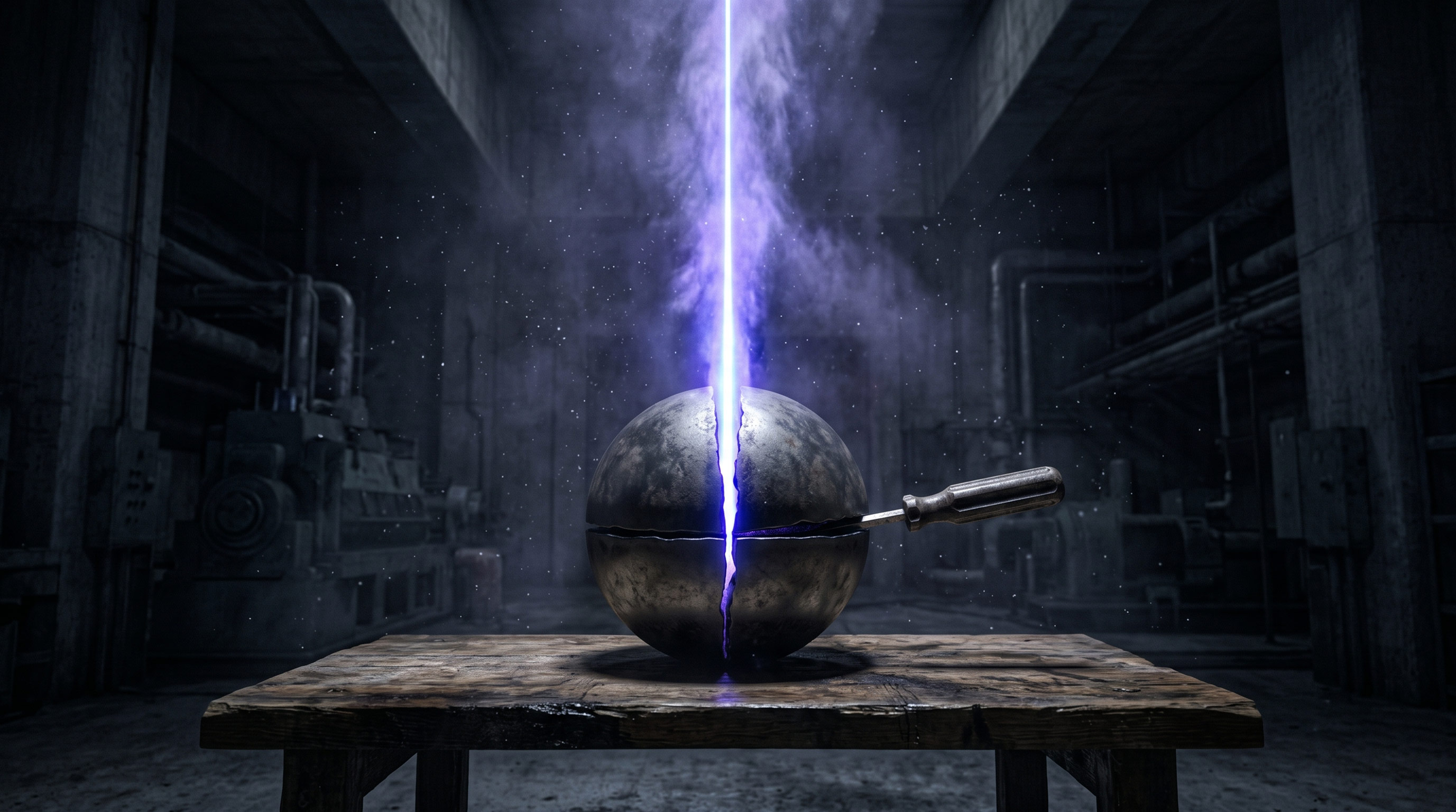
On May 21, 1946, deep inside a highly classified laboratory in Los Alamos, New Mexico, eight scientists gathered around a wooden table. In the center of the table sat a 14-pound, perfectly smooth sphere of refined plutonium. It was the exact same type of radioactive heart that had recently detonated over Nagasaki. The scientists referred to it as the "Demon Core," a nickname it had earned after killing another researcher the previous year. On this afternoon, a brilliant and notoriously arrogant physicist named Louis Slotin was preparing to perform a highly dangerous experiment that he casually called "tickling the dragon’s tail." The objective of the experiment was to bring the plutonium core to the absolute edge of a runaway nuclear chain reaction, stopping just milliseconds before it went critical. To do this, Slotin placed two hollow half-spheres of beryllium around the plutonium. As the top half was lowered, it reflected neutrons back into the core, increasing its reactivity. The safety protocol mandated that the scientists use wooden shims to carefully keep the two halves from fully touching. If the beryllium spheres completely closed around the plutonium, the core would go critical, releasing a lethal burst of radiation. Slotin, however, despised the slow, methodical safety protocols. He preferred a faster, more visceral method. Instead of the approved wooden shims, he used the blade of a standard, flathead screwdriver to prop open the top hemisphere. He stood over the most dangerous object on the planet, holding the top beryllium shell with his left thumb, and casually twisting the blade of the screwdriver with his right hand to widen and narrow the gap, listening to the clicking of the Geiger counters. He had performed this exact, reckless maneuver over a dozen times before, much to the horror of his colleagues. At 3:20 PM, as Slotin twisted the tool to lower the shell, the tip of the flathead screwdriver slipped. The heavy beryllium shell dropped completely, sealing the plutonium core inside. In a fraction of a millisecond, the core went prompt critical. There was no explosion, but the air inside the laboratory was instantly ionized. A sudden, blinding flash of pure, ethereal blue light violently illuminated the dimly lit room. A wave of intense, invisible heat swept across the faces of the eight men. Slotin immediately tasted a sharp, sour metallic flavor in his mouth—a biological reaction to a massive dose of ionizing radiation tearing through his cellular structure. Instinctively, Slotin violently jerked his left hand upward, flipping the top beryllium shell onto the floor and terminating the reaction. The entire event, from the slip of the screwdriver to the removal of the shell, lasted less than one second. The blue light vanished, plunging the room back into its normal, quiet state. The physical world looked exactly as it had a moment before, but the biological reality had been permanently shattered. As the Geiger counters in the room screamed in a continuous, deafening wail, Slotin calmly instructed his colleagues to stand exactly where they had been when the flash occurred. He pulled a piece of chalk from his pocket and drew circles around their shoes on the floor, calculating their distance from the core to estimate their radiation exposure. When he finished mapping the room, he looked at his colleagues. Because he had been leaning directly over the core, his body had absorbed the absolute brunt of the invisible blast, effectively shielding the others from instant death. He had received a fatal dose of over 1,000 rads in less than half a second. He quietly turned to his closest colleague, Alvin Graves, and said, "Well, that does it." Nine days later, after a total collapse of his internal organs, Louis Slotin was dead. The Demon Core was later melted down and its material integrated into a different weapon, leaving behind only the chilling legacy of a single, microscopic slip of a tool against the absolute forces of nature.
The Clockwork Trap
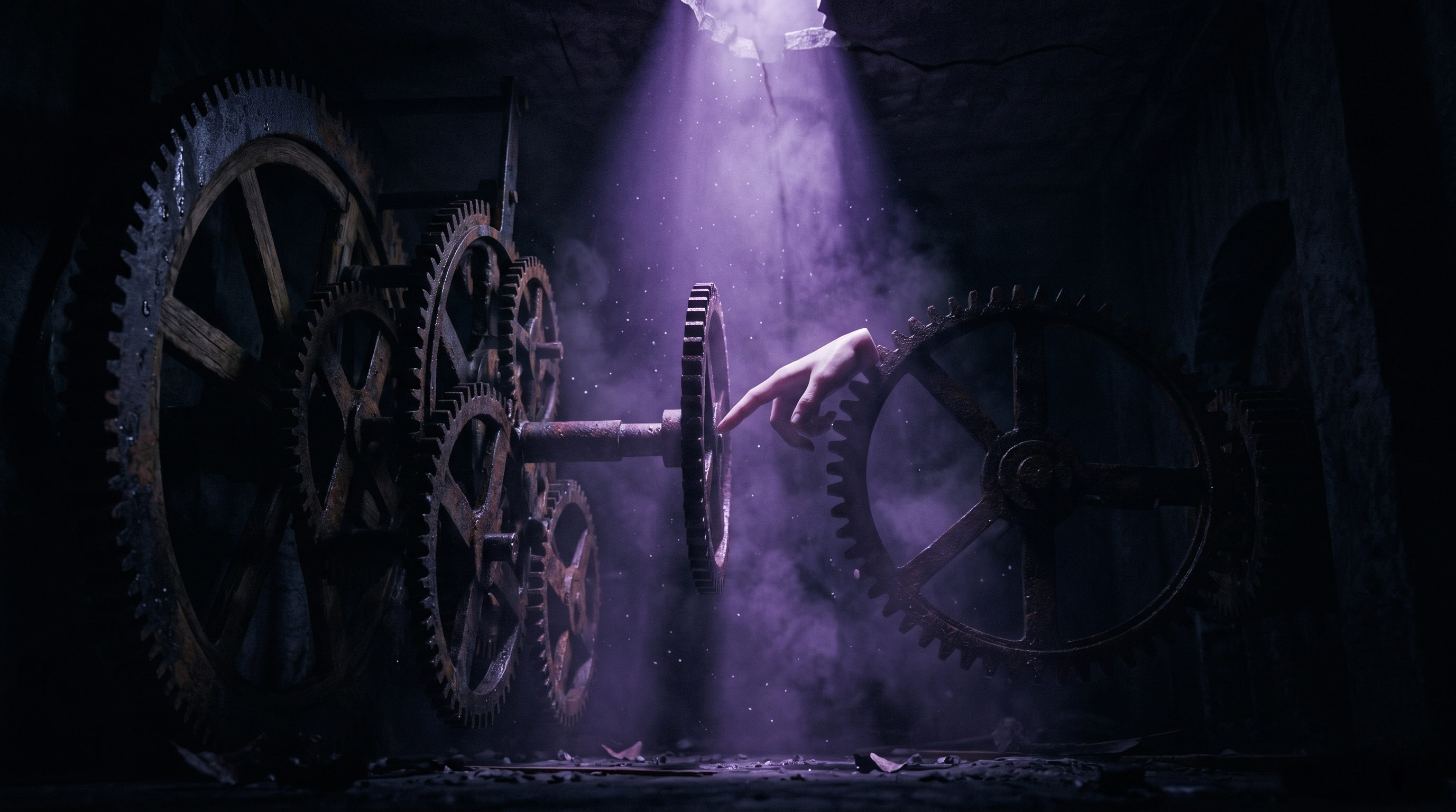
For the vast majority of human existence, time was not a number displayed on a dial; it was a rhythmic, organic experience. It was the movement of shadows across the earth, the transition of the seasons, and the slow, predictable shift of the stars. In the medieval world, the day was not divided into rigid, sixty-minute segments. It was measured by a fluid, flexible system that expanded and contracted based on the season, the available light, and the work that needed to be done. If the sun stayed out longer, the day was longer. If the winter was harsh, the day was short. Life was perfectly synchronized with the pulse of the environment. The shift toward a rigid structure began in the 14th century, deep within the walls of European monasteries. The monks required a way to synchronize their daily prayers with absolute, unyielding precision. They engineered the first mechanical escapement clocks, devices that did not measure the natural flow of time, but instead chopped it into identical, artificial fragments. This invention removed the human experience from the natural world and placed it inside a synthetic, ticking machine. Time was no longer something a person lived; it was something that could be calculated, counted, and strictly divided. The true historical transformation arrived with the Industrial Revolution. Before the widespread use of the synchronized clock, labor was entirely task-oriented. A person worked until the harvest was done or the cloth was woven, dictating their own pace. The mechanical clock dismantled this natural autonomy. The new factory floors required absolute, mass synchronization. If the massive steam-powered machines were to operate efficiently, every human body attached to them had to function at the exact same pace. The clock became the ultimate, invisible supervisor. It did not need to physically watch the workers; the ticking rhythm dictated exactly when they arrived, when they ate, and when they were allowed to leave. Soon, towns and cities erected massive clock towers in their central squares, ensuring that every citizen, not just the factory workers, was marching to the exact same metallic pulse. The invention of Standard Time and the synchronized train schedules effectively turned entire nations into giant, synchronized factory floors. The organic, infinite rhythm of the earth was permanently replaced by the relentless countdown of gears and springs. The natural world was subdued not by physical chains, but by the endless, repetitive ticking of a machine that demanded absolute conformity from the human mind.

The Solopreneur Era: The Rise of the One-Person Empire
The Invisible Empire For the entirety of the 20th century, the architecture of commerce was defined by scale. If you wanted to build a company that influenced the market, commanded revenue, or created products with global reach, you were physically required to build an infrastructure of humans. You needed managers, human resource departments, accountants, and dozens of middle-level administrators. The company was not defined by its product; it was defined by its headcount. Success was measured in the number of desks, the square footage of the office, and the complexity of the organizational chart. The individual was expected to be a specialized, replaceable component within this massive, grinding engine. Then, the digital infrastructure reached a point of critical mass. In the last decade, a silent, radical transformation occurred in how value is generated. The development of sophisticated AI agents, cloud-based automation, and decentralized distribution platforms collapsed the cost of operational scale to near zero. A single individual today has access to the exact same technological capabilities that, twenty years ago, would have required a multimillion-dollar budget and a staff of hundreds. Code can be written by generative models; complex financial logistics can be handled by automated software; marketing and distribution can be orchestrated through global platforms from a single laptop. The "Solopreneur" is not merely a freelancer or a small business owner. It is a new, structural archetype of labor. The one-person empire functions as a lean, hyper-efficient node in the global economy. By stripping away the bloated layers of corporate hiyerarchy—the endless meetings, the bureaucratic friction, and the political posturing—the solopreneur achieves a velocity that no traditional corporation can ever match. They do not trade time for a salary; they trade their autonomy for the power of the systems they have engineered to operate on their behalf. This shift represents a fundamental threat to the industrial status quo. The traditional system depends entirely on the dependency of the individual—it needs the worker to trade their agency for a stable paycheck within a cubicle. But the solopreneur paradigm weaponizes technology to create total operational independence. It is the realization that the most dangerous competitor in the modern market is not another massive corporation, but a single human being who has successfully learned how to use the machine to serve their own purpose, rather than becoming a part of the machine themselves.
Superman: The Alien Who Lost His Flag
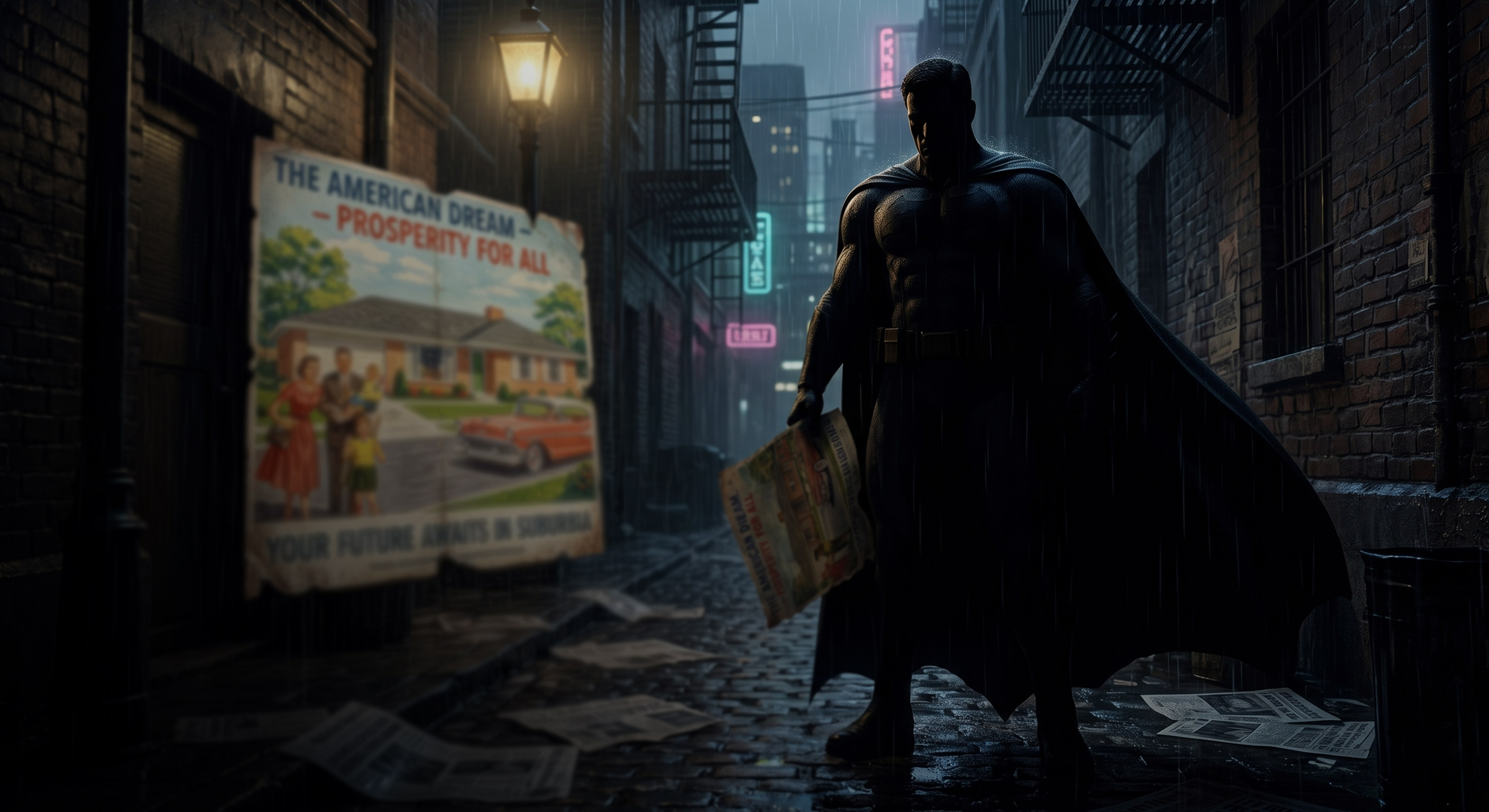
The Alien Who Lost His Flag In the bitter depths of the Great Depression in 1938, inside a cramped bedroom in Cleveland, Ohio, two impoverished teenagers from immigrant families conceived a myth that would define a century. Jerry Siegel and Joe Shuster looked out at a world crippled by economic collapse and the terrifying rise of fascism in Europe. In response, they did not create a soldier or a king; they created the ultimate undocumented immigrant. They dreamed up an infant refugee, Kal-El, fleeing a dying planet to crash-land in the rural heartland of Earth. In his earliest incarnations, this "Superman" was not a sanitized, patriotic icon. He was a violent, radical champion of the oppressed. He did not fight cosmic supervillains; he smashed through the walls of corrupt politicians, hurled abusive slumlords out of windows, and terrorized greedy war profiteers. He was the voice of the voiceless, fighting a deeply flawed establishment from the outside. However, as the 1940s bled into the paranoia of the 1950s Cold War, the establishment realized the immense psychological power of the character. The system could not tolerate a rogue, invincible alien fighting for the lower classes, so they quietly absorbed him. The radical immigrant was stripped of his revolutionary edge, sanitized, and wrapped tightly in a red, white, and blue flag. It was during this era of intense nationalistic propaganda that the famous television and radio broadcasts introduced a new, heavily engineered motto. The champion of the oppressed was suddenly declared to be fighting for "Truth, Justice, and the American Way." The alien from a dead star had been successfully drafted into the military-industrial complex, serving as a flawless, smiling billboard for capitalist supremacy and the illusion of the American Dream. For nearly eighty years, the character operated as the ultimate enforcer of the status quo, deeply tethered to the borders of a single nation. But in the autumn of 2021, the publishers of the Man of Steel made a quiet, seismic alteration to the mythos. In a rapidly fracturing world where the shiny veneer of the "American Way" had heavily corroded under the weight of modern reality, the historic motto was officially retired. The phrase was completely erased from his mythology and replaced with a new directive: "Truth, Justice, and a Better Tomorrow." It was a silent but profound historical admission. The realization had finally set in that a being capable of hearing the heartbeat of every human on the planet, an orphan of the cosmos, could never truly belong to the borders of a single empire or be confined within the fading architecture of a single nation's dream.