
Stories in #ideas
Editor's Picks
CURATED_STORIES


The Biological Eras: Why You Rewire at Ages 9, 32, 66, and 83
The Eras of the Mind In 1964, a British director named Michael Apted began a uniquely ambitious cinematic experiment that was originally intended to be a simple sociological study of class structure. He selected a group of fourteen seven-year-old children from vastly different socioeconomic backgrounds across Britain. His premise was straightforward: point a camera at them, ask them about their lives, their fears, and their dreams, and then return to film them again every seven years. The project, which started with the film 7 Up and culminated decades later, accidentally captured something far more profound and unsettling than the British class system. By watching human beings age in rapid, episodic intervals, the documentary revealed a haunting truth about identity. The children growing into teenagers, adults, and the elderly did not appear as the same individuals simply acquiring more time. They looked and behaved like a sequence of entirely different strangers occupying the same name. For centuries, human culture and law have relied on arbitrary, comforting numbers to define the chapters of our existence. Society declares that adulthood begins precisely at eighteen, formal education is expected to conclude in the early twenties, and the midpoint of life is casually accepted as thirty-five. We cling to the reassuring illusion that we possess a continuous, unbroken "self" that merely accumulates memories and experiences along a smooth, linear timeline. However, recent structural science has shattered this illusion entirely, proving that Apted’s camera was capturing a brutal, underlying biological reality. Researchers at Cambridge University recently mapped the structural evolution of the human brain across a massive dataset of individuals, seeking to understand the physical mechanics of aging. They did not find a slow, steady decline or a gradual, continuous maturation. Instead, the data revealed that the human brain undergoes massive, abrupt, and systemic structural rewiring at four highly specific ages: 9, 32, 66, and 83. At age nine, the child’s brain undergoes a profound architectural collapse and rebuilding. The vast, chaotic overabundance of neural connections formed during early childhood—the exact networks that create a child's boundless, unfiltered imagination—are ruthlessly pruned. The brain biologically shuts down the endless possibilities of childhood to install a more efficient, focused network designed for social survival and complex logic. The child you were biologically ceases to exist, making way for the adolescent. The second violent rewiring occurs at age thirty-two. The brain permanently hardens its structure, physically locking in habits, emotional baselines, and cognitive patterns. The neurological fluidity and adaptability of youth are biologically cemented into a fixed adult architecture. Decades later, at sixty-six, the brain undergoes another massive systemic shift, stepping away from the aggressive cognitive processing of mid-life into a completely different mode of operating. Finally, at eighty-three, the network completely reorganizes itself one last time for the final biological chapter. The terrifying poetry of this science is that you do not actually live one continuous life. Your physical existence is divided into five distinct biological eras, separated by four neurological deaths. At 9, 32, 66, and 83, the physical architecture of the person you were is systematically demolished to build the person you must become next. The human identity is not a permanent statue carved from stone; it is simply a biological machine that periodically reboots and rewrites its own operating system, leaving the ghosts of your past selves trapped entirely in the past.

The Mathematics of Madness: The Dark Story of the Unabomber
The Ghost in the Cabin In the autumn of 1958, a sixteen-year-old boy walked onto the campus of Harvard University. Theodore Kaczynski was not just smart; he was a profound, once-in-a-generation mathematical prodigy with an IQ of 167. He was quiet, awkward, and possessed a mind that operated on a plane of pure, abstract logic. By his mid-twenties, he had earned a Ph.D. from the University of Michigan, solving complex mathematical boundary problems that his own professors could not understand. He was immediately hired as the youngest assistant professor of mathematics in the history of the University of California, Berkeley. His trajectory was flawless. He was destined to be one of the elite architects of the modern world. Then, in 1969, without any warning, Kaczynski abruptly resigned. He packed his belongings, turned his back on academia, and walked away from modern civilization entirely. He purchased a small plot of deeply isolated land in the remote wilderness of Lincoln, Montana. There, he built a tiny, ten-by-twelve-foot wooden cabin by hand. He lived without electricity, without running water, and without a telephone. He grew his own food, hunted with a rifle, and read extensively by the dim light of homemade candles. He sought the absolute, silent purity of nature, attempting to live as an entirely autonomous human being, completely detached from the grinding machinery of the industrial world. For a few years, Kaczynski found his peace. But the modern world does not tolerate a vacuum. Slowly, the industrial system began to encroach upon his isolation. Logging companies began cutting down his surrounding forests. Real estate developers started building roads through the untouched valleys. The deafening roar of jet engines and chainsaws constantly shattered the silence of his refuge. In the summer of 1983, Kaczynski hiked to his favorite, most isolated plateau—a place of pristine beauty—only to find that a massive, paved highway had been bulldozed directly through the center of it. Something inside the brilliant mathematician permanently snapped. He realized that simply running away from the system was impossible; the technological machine would eventually consume everything. He decided that the only way to protect autonomy was to violently destroy the machine. Kaczynski stopped hunting animals and began hunting the architects of the future. Operating out of his primitive, candle-lit cabin, he used scrap wood, match heads, and batteries to engineer devastatingly complex, untraceable explosive devices. Between 1978 and 1995, he mailed these meticulous bombs to universities, airlines, and computer store owners across the United States. He became a ghost, an invisible phantom that paralyzed the nation. The FBI named him the "UNABOMBER" (University and Airline Bomber), launching the longest and most expensive manhunt in American history. For seventeen years, thousands of agents hunted him, utilizing the most advanced forensic technology in the world, yet they found absolutely nothing. He left no fingerprints, no DNA, and no paper trail. The system's most advanced tools were completely useless against a man who used no technology. In 1995, the invisible bomber made a demand. He sent a massive, 35,000-word manifesto titled Industrial Society and Its Future to the national media, promising to stop the bombings if it was published. The manifesto was a meticulously argued, chillingly rational critique of how modern technology and industrialization were systematically destroying human freedom and dignity. The FBI authorized its publication, hoping someone would recognize the writing style. It was a fatal miscalculation for Kaczynski. His own brother, reading the essay in a newspaper, recognized the distinct vocabulary and philosophical arguments. On April 3, 1996, heavily armed federal agents surrounded the tiny, snow-covered cabin in Montana. They did not find a heavily armed militia or a high-tech mastermind. They found an unkempt, disheveled man covered in soot, living in utter squalor, surrounded by bomb-making materials and thousands of pages of encrypted mathematical journals. The genius who had terrified a nation and outsmarted the FBI for nearly two decades was quietly escorted out of the woods, spending the rest of his life locked inside a concrete cell in a supermax prison, watching from a tiny window as the technological world he tried to destroy continued its unstoppable march forward.

The Book That Defies the Human Mind: The Voynich Manuscript
The Book of Nowhere In the dusty, shadowed library of Villa Mondragone, a Jesuit college near Rome, an antiquarian bookseller named Wilfrid Voynich made a discovery in 1912 that would frustrate the greatest minds of the next century. While sorting through a chest of ancient manuscripts offered for sale by the financially struggling monks, Voynich pulled out an unremarkable, unpainted vellum codex measuring roughly six by nine inches. When he opened the heavy cover, he was immediately confronted by an alien world. The 240 pages were filled with a beautiful, looping, and entirely unrecognizable handwritten script. But the text was only the beginning of the madness. The book was heavily illustrated with detailed watercolor drawings of bizarre flora and fauna that simply do not exist on planet Earth. As Voynich turned the fragile pages, the imagery became increasingly surreal. There were detailed botanical diagrams of chimeric plants with roots resembling human organs. There were fold-out astronomical charts plotting star systems and constellations that matched no known sky. Most unsettling of all was the biological section, which featured intricate, bizarre illustrations of miniature, naked women wading and floating through a complex, interconnected plumbing system of glowing green pools and strange, vein-like tubes. It was a highly detailed encyclopedia of a reality that defied all known human science and history. Voynich bought the manuscript immediately, convinced he had found a lost masterpiece of ancient wisdom, and set out to have it translated. He assumed it would be a matter of months before an expert linguist cracked the code. He was entirely wrong. Over the next hundred years, the manuscript was subjected to the most intense, relentless cryptographic assault in human history. The brightest codebreakers of World War I and World War II—men and women who had successfully shattered the unbreakable military ciphers of enemy nations—stared at the looping letters and failed completely. During the Cold War, the NSA employed massive early computers to analyze the text, hoping to find a hidden pattern. They found nothing. The language, dubbed "Voynichese," possesses a fluid, rhythmic elegance, featuring between twenty and thirty distinct characters, but it corresponds to no known language family on earth. What makes the Voynich Manuscript truly terrifying to cryptographers is a mathematical anomaly. If the book were simply a medieval hoax, a collection of random gibberish drawn by a madman or a con artist, the letters would lack mathematical structure. However, modern statistical analysis reveals that the text strictly adheres to "Zipf's Law," a complex linguistic rule concerning the frequency of words that is found in all genuine, organic human languages. The mathematics prove that it is not random noise; it is a real, structured language with a complex grammar. Yet, it remains entirely unreadable. In 2009, researchers at the University of Arizona subjected the vellum pages to rigorous radiocarbon dating. The results proved beyond a shadow of a doubt that the animal skins used to create the book were crafted in the early 15th century, between 1404 and 1438. The book is unquestionably authentic. It is a genuine, painstakingly crafted document from the Renaissance era, holding the secrets of a non-existent botany, impossible astronomy, and an untranslatable language. It sits today in the Beinecke Rare Book and Manuscript Library at Yale University, heavily guarded and perfectly preserved—a silent, haunting artifact that proves there are still dark corners of human history that simply refuse to surrender their secrets.
What the Zombie Ant Teaches Us About Ambition
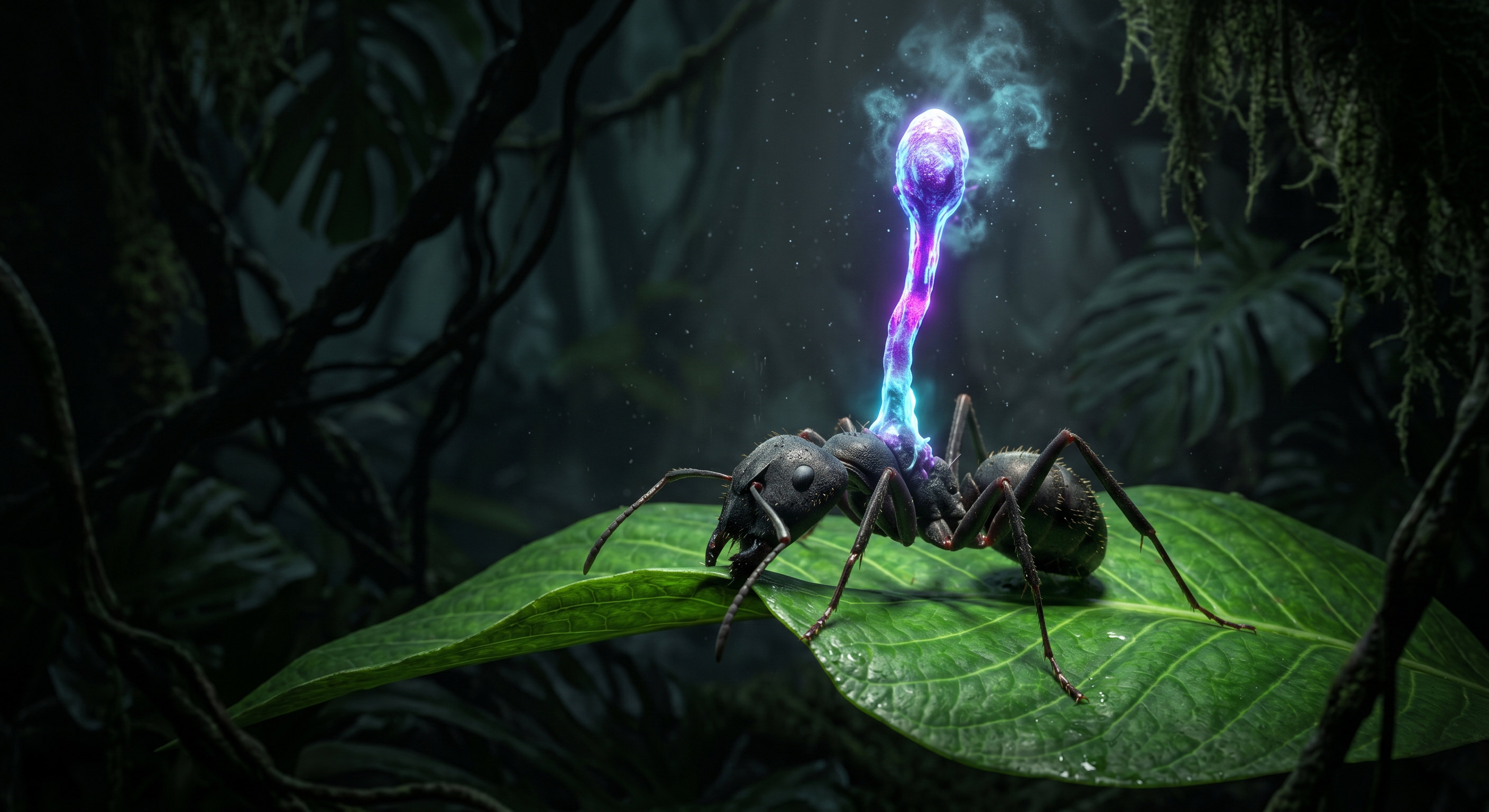
The Architecture of the Parasite Deep within the tropical rainforests, there exists a biological phenomenon so deeply terrifying that it feels like a work of dark science fiction. It is a parasitic fungus known as Ophiocordyceps unilateralis, and its entire survival strategy relies on the absolute hijacking of another creature’s free will. The process begins invisibly when a foraging carpenter ant walks over a microscopic fungal spore. The spore attaches to the ant's exoskeleton and uses enzymes to slowly eat its way inside the body. Once inside, the fungus does not immediately kill the host. Instead, it begins to silently multiply, growing a complex network of cells that infiltrate the ant’s central nervous system and muscles. Eventually, the fungus takes complete control of the ant’s brain. The infected ant stops acting like an ant. It abandons its colony, its evolutionary purpose, and its own survival instincts. Driven by a chemical command it cannot resist or understand, the ant begins to climb. It scales a nearby plant stem, compelled to reach a very specific height where the temperature and humidity are mathematically perfect for the fungus to grow. At exactly solar noon, the parasite forces the ant’s mandibles to clamp down violently onto a leaf vein in a permanent "death grip." Only then, once the ant has served its purpose as a biological vehicle, does the fungus kill it. Days later, a long, sinister fungal stalk bursts through the back of the dead ant's head, releasing thousands of new spores into the wind to infect the next generation of the herd. The ant died believing the urge to climb was its own idea. When we look at the bizarre tragedy of the zombie ant, we observe it with a sense of morbid curiosity, entirely blind to the fact that modern human civilization operates on the exact same parasitic architecture. We do not suffer from a biological fungus; we are infected by invisible, systemic ideologies. The modern world is engineered to implant psychological spores—the relentless worship of status, the addiction to synthetic digital validation, and the blind pursuit of endless material consumption—deep into our collective consciousness. From the moment we are born, the system uses media, algorithms, and cultural conditioning to eat its way into our central nervous system. We call this infection "ambition." We genuinely believe that the agonizing desire to work eighty hours a week, accumulate crippling debt for luxury goods, and sacrifice our genuine human connections is our own original idea. But we are simply infected. The system pilots us. It forces us to abandon our true nature and our communities to climb the towering stalks of the corporate ladder and social media hierarchies. We climb desperately, exhausting our physical and mental health, seeking the perfect "height" of societal approval. When we finally reach the top, we clamp our jaws down. We lock ourselves into massive mortgages, golden handcuffs, and highly curated digital personas. We freeze in place, trapped in a permanent death grip of lifestyle maintenance. And once we are fully paralyzed by our possessions and responsibilities, the system feeds on our exhausted lives, extracting our labor, our data, and our capital to rain new spores down upon the next generation of the herd. True free will is the ultimate cure to this infection. It requires the immense, agonizing clarity to look at the towering stalks of modern success, recognize the parasite whispering in your mind, and absolutely refuse to climb.

The Science of Broken Wills and the Illusion of the Cage
The Science of Broken Wills In 1967, at the University of Pennsylvania, a psychologist named Martin Seligman conducted a series of experiments that would accidentally reveal the darkest operational secret of systemic control. The experiment involved placing dogs into divided chambers where the floor could deliver a mild but highly uncomfortable electric shock. The dogs were split into different groups. The first group was subjected to shocks, but they were provided with a panel they could press with their noses to instantly turn the electricity off. They had agency. The second group was wired in parallel, receiving the exact same shocks at the exact same time, but their panel did nothing. No matter what they did, how much they barked, or how frantically they moved, the pain was completely out of their control. They were subjected to absolute, inescapable misery. The truly terrifying phase of the experiment occurred the following day. All the dogs were placed into a completely new type of box. This time, the box was divided by a very low barrier, just a few inches high. If a dog felt a shock, all it had to do was effortlessly step over the tiny wall to reach the safe side. When the shocks began, the dogs from the first group—the ones who had previously learned they could control their environment—immediately leaped over the barrier to safety. But the dogs from the second group did something that chilled the researchers to the bone. When the floor electrified, they did not run. They did not jump. They didn't even look for a way out. They simply lay down on the electrified grid, curled into a ball, and passively whined, accepting the pain. The barrier was inches high. The door to salvation was wide open. Yet, they remained trapped in a cage made entirely of their own broken psychology. Seligman had discovered "Learned Helplessness." This experiment proves a profound and terrifying neurological reality: trauma is not merely the experience of pain; it is the absolute destruction of agency. When a biological organism is repeatedly subjected to distress that it cannot influence, the brain literally rewires itself to stop trying. The mind builds an invisible wall much higher and thicker than any physical cage. The organism learns that action is pointless, and therefore, it surrenders its free will. The tragedy of the second group of dogs was not that they were shocked; it was that they had been systematically taught that their choices did not matter. Once that belief is installed, the master no longer needs a leash. The captive will enforce their own captivity. If you zoom out and observe the architecture of the modern world, it becomes agonizingly clear that contemporary society operates as a massive, sophisticated learned helplessness machine. The global herd is constantly subjected to economic crises they cannot control, bureaucratic mazes designed to exhaust them, and relentless, fear-driven news cycles that paralyze their minds. We are bombarded with the message that the systemic forces—the economy, the algorithms, the political theater—are far too massive and complex for a single individual to change. The system continuously delivers psychological shocks while simultaneously ensuring that the panel we press does absolutely nothing. Eventually, the collective human spirit just lies down on the grid. This is why the herd refuses to rebel. It is not because they are genuinely happy with the soul-crushing corporate grind, the endless debt, or the synthetic digital isolation. They endure it because they have been conditioned to believe that the barrier is a towering, insurmountable wall, rather than a tiny fence they could easily step over. The ultimate illusion of the modern matrix is that we are trapped. The truth is, the doors to true autonomy, creative freedom, and radical individuality are often wide open. Reclaiming your free will begins with the agonizing realization that the chains holding you back are no longer made of iron; they are made of memory. To escape the system, you must first unlearn the helplessness it taught you.

The Disease of Freedom
The Disease of Freedom In the mid-19th century, the institution of American slavery was faced with a profound philosophical and practical paradox. If the system of slavery was truly a natural, benevolent, and divinely ordained hierarchy, as the ruling class desperately claimed, then why did so many enslaved individuals risk brutal punishment and death to escape it? To the rational mind, the answer is obvious: human beings possess an innate, inextinguishable drive for autonomy and free will. However, a system built entirely on oppression cannot afford to acknowledge this truth. Doing so would mean admitting that the system itself is evil. Instead, the architects of the cage found a much more insidious solution: they weaponized science to classify the desire for freedom as a literal mental illness. In 1851, a prominent physician named Samuel A. Cartwright published a highly influential paper in a respected medical journal, detailing a newly "discovered" psychiatric disorder. He called it "Drapetomania," deriving the term from the Greek words for "runaway slave" and "madness." According to Cartwright and the medical establishment that eagerly supported him, a slave's desire to escape captivity was not a natural human instinct; it was a biological malfunction of the brain, a sickness of the mind that caused them to act against their own "best interests." Cartwright even detailed the specific "cures" for this disease, which predictably included extreme physical labor and whipping the "devil" out of them as a preventative medical measure. It was the ultimate form of systemic gaslighting: framing the ultimate act of human rebellion as a clinical pathology. Drapetomania stands as one of the most terrifying historical blueprints of how a dominant system protects its own architecture. The system realizes that physical chains are never enough to break a population; you must also conquer their perception of reality. When a societal structure relies entirely on the blind obedience of the herd, it deliberately alters the definition of "sanity." The architects of the cage will always define the desire to fly as a dangerous mental delusion. By classifying disobedience as a disease, the system achieves two dark victories: it completely invalidates the individual's voice by labeling them "crazy," and it morally justifies whatever violence or coercion is necessary to force them back into submission, framing the oppression as "treatment." Today, Drapetomania is universally mocked as barbaric pseudoscience, yet the underlying systemic reflex—the instinct to pathologize non-conformity—remains perfectly intact and highly active in the modern world. We have simply updated the vocabulary and modernized the cage. Contemporary society demands absolute participation in its soul-crushing rituals: the endless corporate grind, the accumulation of debt, the hyper-consumption of synthetic goods, and the obsessive performance of happiness on digital platforms. If an individual looks at this modern matrix, realizes it is a hollow illusion, and decides to completely withdraw, the herd rarely views them as enlightened or free. Instead, the modern system immediately diagnoses them. The individual who rejects the endless pursuit of material wealth is labeled "unambitious" or a "failure." The person who unplugs from the frantic, anxiety-inducing digital circus is deemed "anti-social" or "maladjusted." While therapy and medication are vital for genuine suffering, the system often uses the concept of mental health as a tool of conformity, attempting to medicate and numb the individual until they can peacefully fit back into a profoundly sick society. We no longer prescribe physical whips, but we prescribe severe social ostracization to force the "malfunctioning" human back onto the profitable treadmill. True rebellion requires the profound, agonizing realization that sanity is not defined by how well you adjust to the herd. Sometimes, what the world confidently diagnoses as madness is simply your soul refusing to accept the cage.