The Book of Nowhere
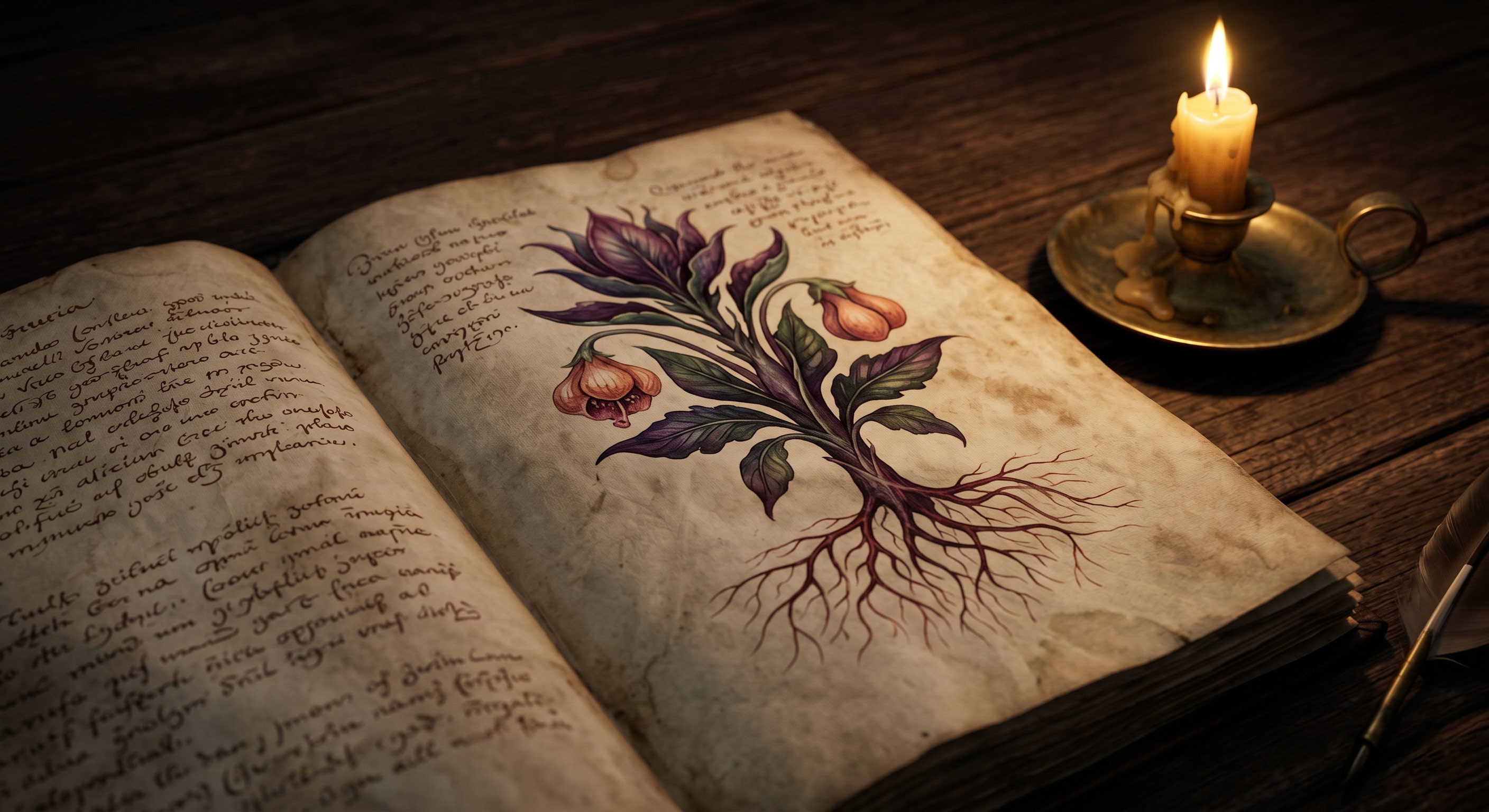
In the dusty, shadowed library of Villa Mondragone, a Jesuit college near Rome, an antiquarian bookseller named Wilfrid Voynich made a discovery in 1912 that would frustrate the greatest minds of the next century. While sorting through a chest of ancient manuscripts offered for sale by the financially struggling monks, Voynich pulled out an unremarkable, unpainted vellum codex measuring roughly six by nine inches. When he opened the heavy cover, he was immediately confronted by an alien world. The 240 pages were filled with a beautiful, looping, and entirely unrecognizable handwritten script. But the text was only the beginning of the madness. The book was heavily illustrated with detailed watercolor drawings of bizarre flora and fauna that simply do not exist on planet Earth.
As Voynich turned the fragile pages, the imagery became increasingly surreal. There were detailed botanical diagrams of chimeric plants with roots resembling human organs. There were fold-out astronomical charts plotting star systems and constellations that matched no known sky. Most unsettling of all was the biological section, which featured intricate, bizarre illustrations of miniature, naked women wading and floating through a complex, interconnected plumbing system of glowing green pools and strange, vein-like tubes. It was a highly detailed encyclopedia of a reality that defied all known human science and history. Voynich bought the manuscript immediately, convinced he had found a lost masterpiece of ancient wisdom, and set out to have it translated.
He assumed it would be a matter of months before an expert linguist cracked the code. He was entirely wrong. Over the next hundred years, the manuscript was subjected to the most intense, relentless cryptographic assault in human history. The brightest codebreakers of World War I and World War II—men and women who had successfully shattered the unbreakable military ciphers of enemy nations—stared at the looping letters and failed completely. During the Cold War, the NSA employed massive early computers to analyze the text, hoping to find a hidden pattern. They found nothing. The language, dubbed "Voynichese," possesses a fluid, rhythmic elegance, featuring between twenty and thirty distinct characters, but it corresponds to no known language family on earth.
What makes the Voynich Manuscript truly terrifying to cryptographers is a mathematical anomaly. If the book were simply a medieval hoax, a collection of random gibberish drawn by a madman or a con artist, the letters would lack mathematical structure. However, modern statistical analysis reveals that the text strictly adheres to "Zipf's Law," a complex linguistic rule concerning the frequency of words that is found in all genuine, organic human languages. The mathematics prove that it is not random noise; it is a real, structured language with a complex grammar. Yet, it remains entirely unreadable.
In 2009, researchers at the University of Arizona subjected the vellum pages to rigorous radiocarbon dating. The results proved beyond a shadow of a doubt that the animal skins used to create the book were crafted in the early 15th century, between 1404 and 1438. The book is unquestionably authentic. It is a genuine, painstakingly crafted document from the Renaissance era, holding the secrets of a non-existent botany, impossible astronomy, and an untranslatable language. It sits today in the Beinecke Rare Book and Manuscript Library at Yale University, heavily guarded and perfectly preserved—a silent, haunting artifact that proves there are still dark corners of human history that simply refuse to surrender their secrets.