The Ghost in the Cabin
In the autumn of 1958, a sixteen-year-old boy walked onto the campus of Harvard University. Theodore Kaczynski was not just smart; he was a profound, once-in-a-generation mathematical prodigy with an IQ of 167. He was quiet, awkward, and possessed a mind that operated on a plane of pure, abstract logic. By his mid-twenties, he had earned a Ph.D. from the University of Michigan, solving complex mathematical boundary problems that his own professors could not understand. He was immediately hired as the youngest assistant professor of mathematics in the history of the University of California, Berkeley. His trajectory was flawless. He was destined to be one of the elite architects of the modern world.
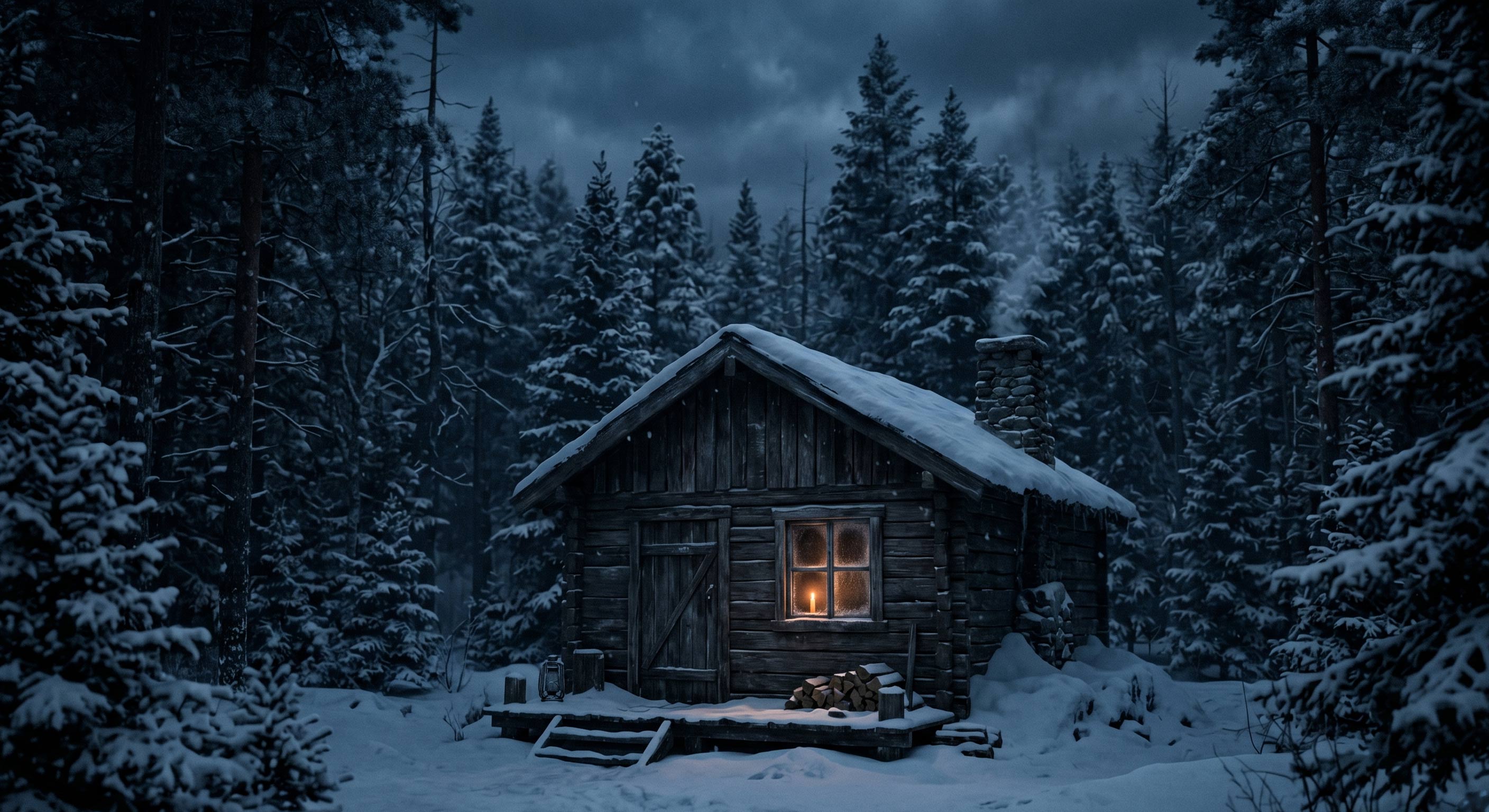
Then, in 1969, without any warning, Kaczynski abruptly resigned. He packed his belongings, turned his back on academia, and walked away from modern civilization entirely. He purchased a small plot of deeply isolated land in the remote wilderness of Lincoln, Montana. There, he built a tiny, ten-by-twelve-foot wooden cabin by hand. He lived without electricity, without running water, and without a telephone. He grew his own food, hunted with a rifle, and read extensively by the dim light of homemade candles. He sought the absolute, silent purity of nature, attempting to live as an entirely autonomous human being, completely detached from the grinding machinery of the industrial world.
For a few years, Kaczynski found his peace. But the modern world does not tolerate a vacuum. Slowly, the industrial system began to encroach upon his isolation. Logging companies began cutting down his surrounding forests. Real estate developers started building roads through the untouched valleys. The deafening roar of jet engines and chainsaws constantly shattered the silence of his refuge. In the summer of 1983, Kaczynski hiked to his favorite, most isolated plateau—a place of pristine beauty—only to find that a massive, paved highway had been bulldozed directly through the center of it. Something inside the brilliant mathematician permanently snapped. He realized that simply running away from the system was impossible; the technological machine would eventually consume everything. He decided that the only way to protect autonomy was to violently destroy the machine.
Kaczynski stopped hunting animals and began hunting the architects of the future. Operating out of his primitive, candle-lit cabin, he used scrap wood, match heads, and batteries to engineer devastatingly complex, untraceable explosive devices. Between 1978 and 1995, he mailed these meticulous bombs to universities, airlines, and computer store owners across the United States. He became a ghost, an invisible phantom that paralyzed the nation. The FBI named him the "UNABOMBER" (University and Airline Bomber), launching the longest and most expensive manhunt in American history. For seventeen years, thousands of agents hunted him, utilizing the most advanced forensic technology in the world, yet they found absolutely nothing. He left no fingerprints, no DNA, and no paper trail. The system's most advanced tools were completely useless against a man who used no technology.
In 1995, the invisible bomber made a demand. He sent a massive, 35,000-word manifesto titled Industrial Society and Its Future to the national media, promising to stop the bombings if it was published. The manifesto was a meticulously argued, chillingly rational critique of how modern technology and industrialization were systematically destroying human freedom and dignity. The FBI authorized its publication, hoping someone would recognize the writing style. It was a fatal miscalculation for Kaczynski. His own brother, reading the essay in a newspaper, recognized the distinct vocabulary and philosophical arguments.
On April 3, 1996, heavily armed federal agents surrounded the tiny, snow-covered cabin in Montana. They did not find a heavily armed militia or a high-tech mastermind. They found an unkempt, disheveled man covered in soot, living in utter squalor, surrounded by bomb-making materials and thousands of pages of encrypted mathematical journals. The genius who had terrified a nation and outsmarted the FBI for nearly two decades was quietly escorted out of the woods, spending the rest of his life locked inside a concrete cell in a supermax prison, watching from a tiny window as the technological world he tried to destroy continued its unstoppable march forward.