Why We Flew Before We Watched
The official birth of the airplane is recognized as December 17, 1903, while the television did not make its functional debut until January 1926. When you pause to think about it, this chronological order feels almost paradoxical. How did humanity figure out how to force a massive, heavy structure of wood and metal to defy gravity and fly through the air decades before figuring out how to build a relatively unassuming box that displays moving pictures? At first glance, making a multi-ton machine fly seems infinitely more complex than projecting a simple image, yet the explanation lies not just in the progression of science, but in the deepest instincts and historical ambitions of the human mind.
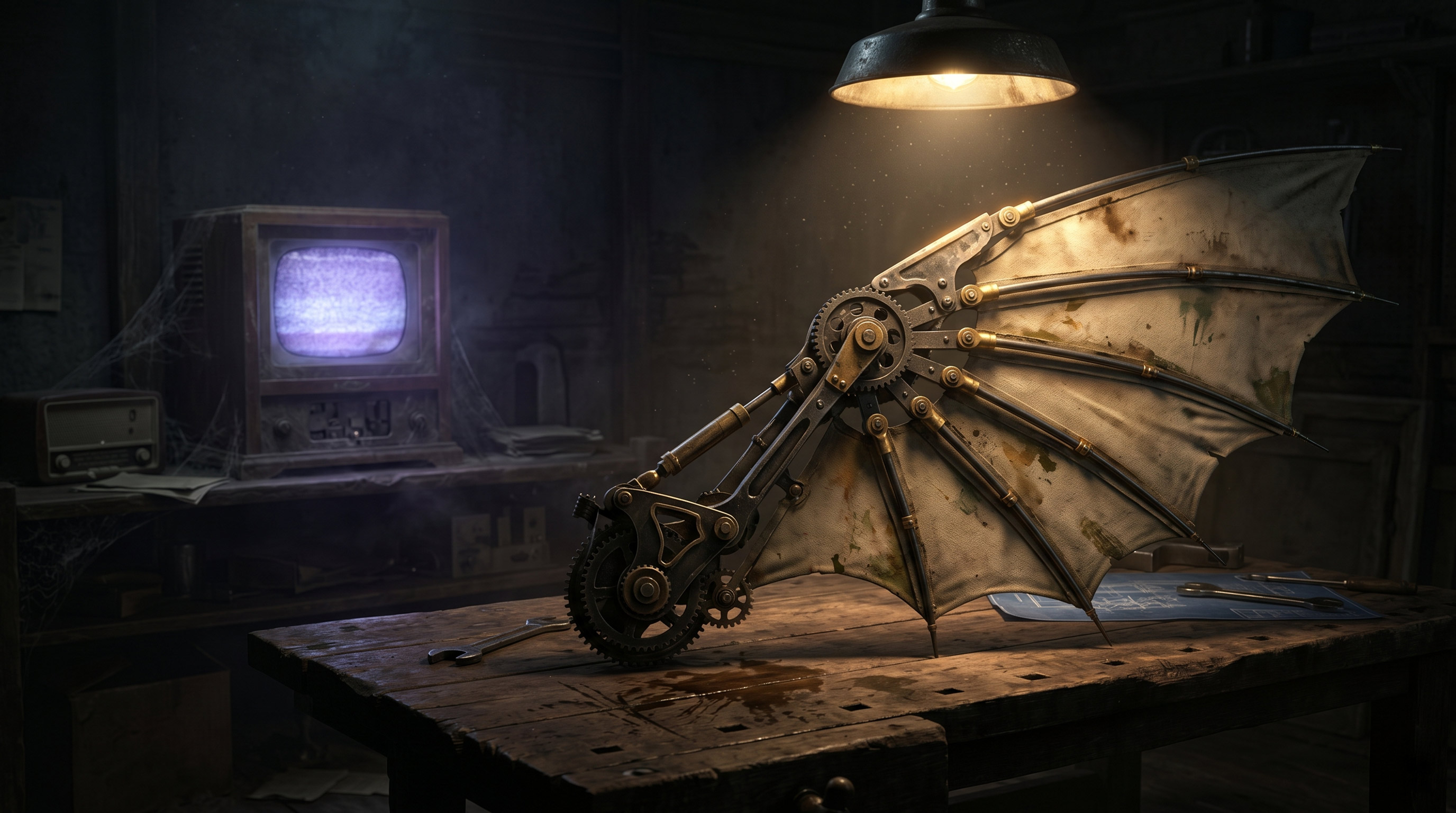
The most crucial factor in this timeline is that humanity always had a physical reference point for flight. For thousands of years, humans looked up and watched birds, bats, and insects, giving us a biological blueprint to obsess over. From the ancient myths of Icarus to Leonardo da Vinci’s intricate mechanical sketches, the idea of attaching wings to a human body was a persistent, tangible dream. We knew flight was physically possible; it was simply a matter of mastering the mechanics. Once engineers developed an internal combustion engine that was simultaneously powerful and light enough, the airplane became an inevitable reality. Flight was entirely bound by the observable, tactile rules of physics and aerodynamics that we could test with our own hands.
In stark contrast, television is an absurd concept when viewed through the lens of nature. There is no biological equivalent to a cathode-ray tube, and there are no creatures in the wild that convert visual frames and audio into analog signals, broadcast them invisibly through the air via radio waves, and reconstruct them on a glowing screen. To invent the airplane, humans had to master the physical world, but to invent the television, we had to imagine an entirely invisible, electronic architecture that had absolutely no precedent in the natural universe. Furthermore, this invisible architecture required a level of technological investment that was simply not a priority during an era defined by global conflict and the brutal hierarchy of survival. The ability to scout enemy lines from above or drop explosives secured massive military funding, prioritizing the conquest of the sky long before there was any societal need to broadcast entertainment into living rooms.
Beyond survival, however, these two inventions represent entirely different directions of human willpower. The airplane was the ultimate triumph of the individual over physical boundaries, the realization of humanity's oldest desire to break free from the earth and assert our own free will against the universal law of gravity. It was a machine of motion, exploration, and absolute escape. The television, conversely, was the dawn of a completely different era. While the airplane physically moved people across the globe, the television anchored them in place, requiring a complex infrastructure that paved the way for modern mass media. Humanity conquered the sky first because we possessed an innate drive to break out of our cages; we built the glowing screen much later, only when society was finally ready to sit still and watch the world rather than experience it.