The Silence of Eilean Mòr
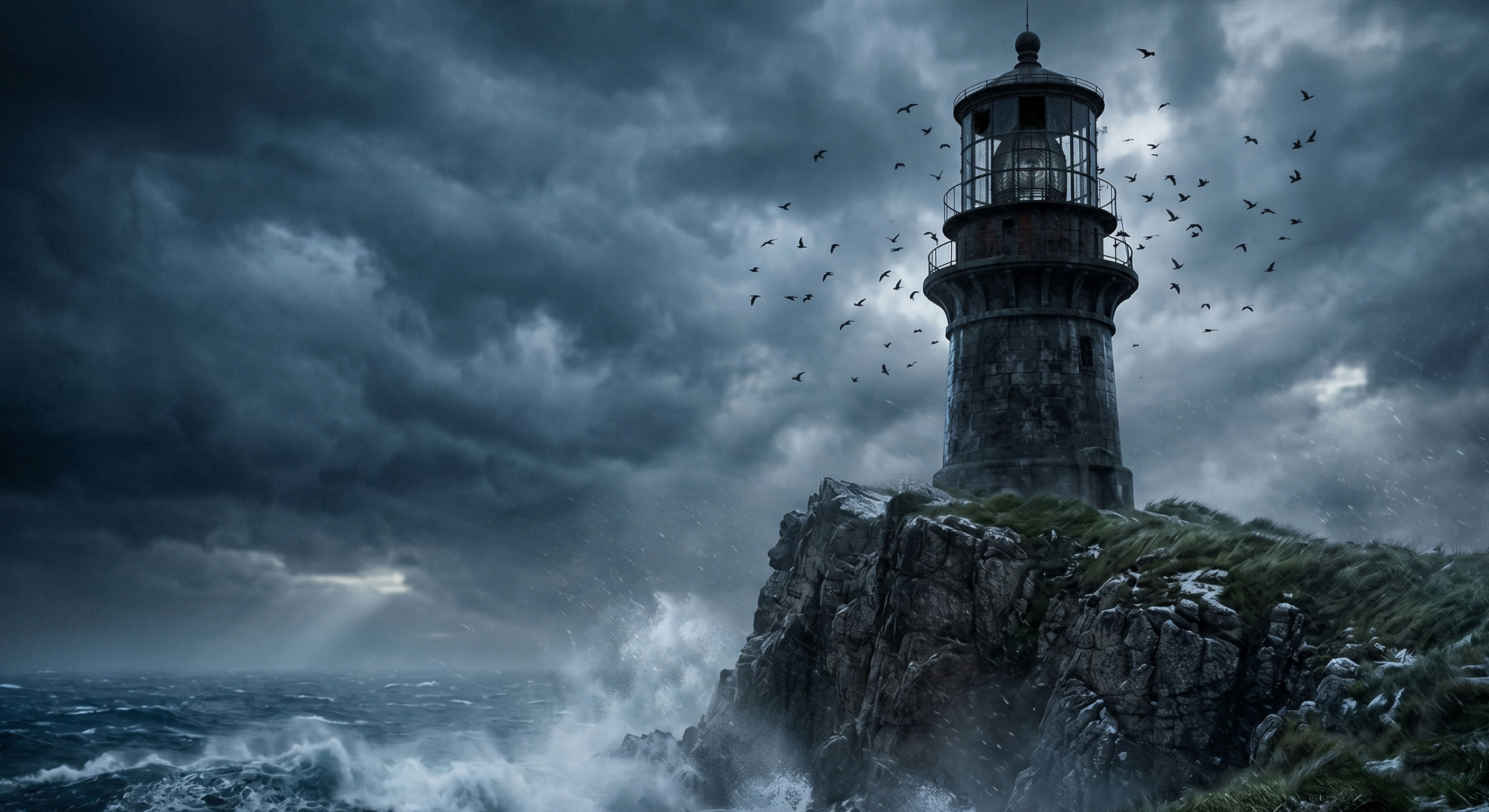
The Outer Hebrides of Scotland are known for their unforgiving weather and isolating geography, but even by those brutal standards, the Flannan Isles are exceptionally desolate. The largest of these rocky outcrops, Eilean Mòr, is a sheer, grass-topped cliff rising aggressively out of the freezing North Atlantic. In 1899, a state-of-the-art lighthouse was constructed on the peak of the island to guide passing ships through the treacherous waters. It was a massive, seventy-five-foot tower of solid stone, designed to withstand the absolute worst of nature's fury. Manning this remote outpost was a highly experienced crew of three keepers: Thomas Marshall, James Ducat, and Donald MacArthur. They were tough, seasoned men who had spent their entire lives battling the ocean.
On the night of December 15, 1900, the captain of the passing steamer Archtor noticed something deeply alarming: the massive beam of the Flannan Isles lighthouse was entirely dark. When the ship reached port, the captain reported the dead light, but severe winter storms delayed any rescue attempt. It wasn't until December 26, the day after Christmas, that the relief ship Hesperus finally managed to reach the island. As the ship approached the cliffs, the crew fired a flare and blew the ship’s horn. The only response was the deafening sound of the crashing waves.
The relief keeper, a man named Joseph Moore, was sent ashore in a small rowboat. He climbed the steep, narrow stone steps carved into the cliff face, feeling a growing sense of dread with every step. When he reached the lighthouse, he found the heavy entrance gate and the main doors completely locked. Inside, the silence was overwhelming. The ashes in the fireplace were stone cold, indicating it had been unlit for days. The beds were unmade. The mechanical clocks on the wall had completely stopped. But the most unsettling discovery was found in the hallway: two sets of heavy outdoor oilskins and waterproof boots were missing, but the third set remained hanging on its peg. This meant that one of the men had exited the lighthouse into the freezing, violent winter air wearing nothing but his indoor clothes. Nearby, a single wooden chair was found overturned on the kitchen floor, suggesting someone had stood up in a sudden, desperate panic.
Desperate for answers, Moore searched for the official lighthouse logbook. What he found only deepened the horror. The entries leading up to the disappearance defied all logic. On December 12, Thomas Marshall noted "severe winds the likes of which I have never seen before in twenty years." He wrote that James Ducat, the principal keeper, was completely silent, and that Donald MacArthur—a veteran sailor famous on the mainland for his booming voice and fearless temper—was weeping. On December 13, the log stated that the storm continued, and all three men were praying.
The terrifying paradox of these entries was that the official weather reports from the surrounding islands and passing ships recorded completely calm weather and clear skies on those exact days. There was no storm. Whatever the three men were experiencing, whatever was making a hardened veteran cry and forcing them to their knees in prayer, was entirely isolated to that single, lonely rock in the ocean.
The final entry in the logbook was written on the afternoon of December 15. It was chillingly brief. It simply read: "Storm ended, sea calm. God is over all."
Despite massive search efforts across every inch of the island, not a single trace of Thomas Marshall, James Ducat, or Donald MacArthur was ever found. No bodies washed ashore, no wreckage was recovered. They had simply vanished from the face of the earth, leaving behind a dark tower, an overturned chair, and a storm that existed nowhere else but in their own terrified words.